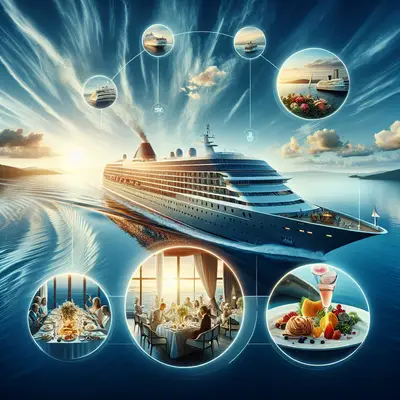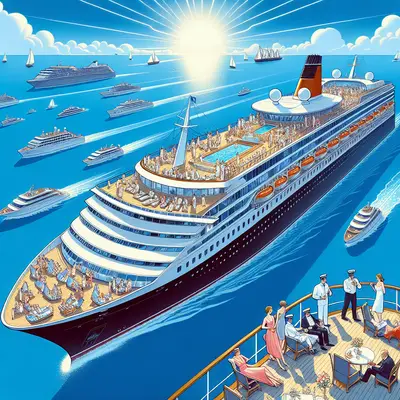
Every cruise line publishes glamorous brochures. Fewer reveal their true character at first glance. For travelers who view the ocean as a recurring address rather than a one-time escape, the distinctions between brands are not merely about suites and price points, but about philosophy, rhythm, and an almost intangible sense of fit. Understanding these subtleties transforms your experience from “taking a cruise” into cultivating a preferred way of being at sea.
Below are five exclusive, often-overlooked insights that help you read between the brochures and align yourself with the cruise line whose quiet choices mirror your own.
The Art of Pace: How a Line Chooses to Spend Your Time
A cruise line’s deepest value is revealed not in its hardware, but in how it spends your hours.
Some lines choreograph every moment—morning stretch, pool games, trivia, production show—creating a kinetic energy that never really settles. Others curate long, contemplative stretches of unscheduled time, designing itineraries with generous port stays and late departures that encourage lingering ashore and quiet evenings on deck.
Look carefully at the cadence of a line’s sample daily programs and itineraries. Do port calls cluster in a frantic sequence, or is there a deliberate alternation between exploration and restoration? Are overnight stays in major cities a signature, or an exception? Frequent overnights and late stays signal a line that trusts guests to pursue deeper, less hurried engagement with destinations.
For travelers who value atmosphere over amusement, the right pace is transformative. A ship that understands the luxury of an unhurried morning in port, or a midnight departure timed to watch a skyline recede over dessert, offers a very different emotional climate from one that treats each stop as a quick collection of postcard views.
Culinary Clues: Menus as a Mirror of a Line’s Worldview
Menus, wine lists, and even the placement of dining rooms offer remarkably precise clues about a cruise line’s identity.
Consider how a line handles regional authenticity. Some brands maintain a default, globalized menu with a few local nods; others construct entire evenings around the geography outside the windows—Greek vintages in the Aegean, Sicilian olive oils en route to Palermo, Nordic tasting menus in the fjords. Look for whether the line partners with local producers, rotates guest chefs from culinary institutes, or maintains long-standing collaborations with Michelin-recognized talent.
The wine list is equally revealing. A broad but generic assembly of labels suggests a focus on volume and familiarity. A tighter, more thoughtfully edited cellar, with smaller producers and vintages aligned to the route, hints at a brand that prioritizes curation over crowd-pleasing abundance.
Even the architecture of dining spaces tells a story. Open-kitchen concepts and chef’s tables convey a desire for intimacy and transparency; traditional grand dining rooms signal theatricality and ritual. A line that builds outdoor galleys for live grilling under the stars is designing for ambiance, not just efficiency. Taken together, these choices reflect not simply how well you will eat, but what the line believes “dining at sea” should feel like.
The Silent Service Signature: Training, Timing, and Intuition
True premium service on a cruise ship is rarely about the number of staff per guest; it is about the nuance of how they appear and disappear.
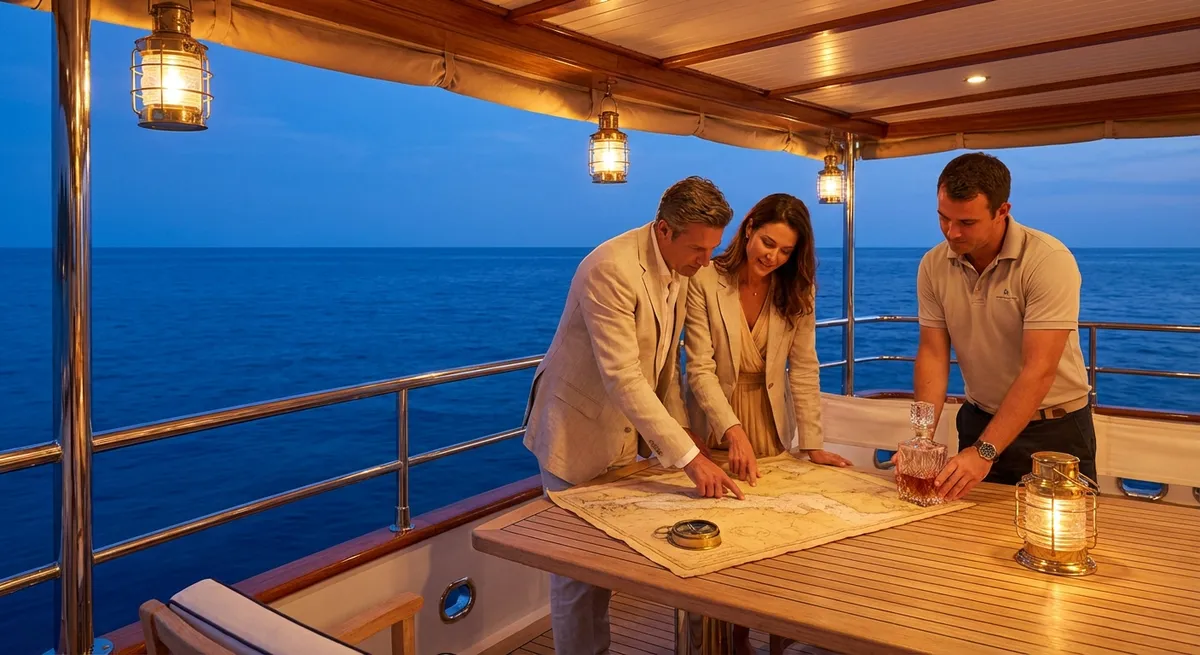
Each line has a service “dial” that sets its staff’s level of formality, verbal engagement, and initiative. Some brands train for a polished, club-like familiarity—names learned within hours, preferences remembered after a single order. Others cultivate a diplomatic reserve: understated, anticipatory, present when needed and invisible when not.
The most telling details are subtle. Do stewards adjust the angle of your balcony chair to follow the sun without comment? Are cold towels and infused water offered as you return from a hot-day excursion without your needing to ask? Does your sommelier remember not only your preferred varietal, but that you favor it lightly chilled?
Another indicator: how a line handles the imperfect moment. When embarkation is delayed, or weather disrupts a port call, do crew members receive real-time information and guidance, or are they left to improvise apologies? Brands that invest in deep training and clear communication protocols tend to deliver consistent elegance even when circumstances are not.
For discerning travelers, these invisible systems—the philosophy behind when a knock is made, when a question is asked, when a suggestion is offered—matter more than formal but scripted friendliness. They create a cocoon of ease that feels natural rather than staged.
Design as Intent: What the Ship’s Spaces Say About You
The physical language of a ship is rarely accidental. Corridor widths, ceiling heights, and sightlines all broadcast who the line imagines as its ideal guest.
Some ships use dramatic, multideck atriums, grand staircases, and bright, kinetic lighting to generate a sense of public spectacle. These are social stages designed for visibility, chance encounters, and a certain celebratory energy. Others opt for low, warm lighting, layered textures, and a warren of smaller lounges, each with its own acoustic and visual privacy. Those are ships intended for quiet conversation and contemplation rather than performance.
Study deck plans and photographs beyond the headline venues. How many semi-private corners exist in lounges and on open decks? Are there shaded, wind-protected niches with proper loungers and side tables, or primarily large, open pool areas? Do library spaces, observation lounges, or art-filled corridors receive prime real estate, or are they afterthoughts?
Similarly, a line’s approach to wellness spaces speaks volumes. Some brands treat the spa as a discrete facility; others weave wellness into the ship’s entire design—walking tracks with vistas, open-air yoga decks, thermal suites oriented around sea views rather than interior walls.
Your ideal cruise line is the one whose spaces seem to anticipate your preferred way of inhabiting a day: whether that’s being visibly in the heart of the ship’s energy, or quietly perched above its wake with a book and a glass of wine.
Itinerary Philosophy: Depth, Rarity, and Narrative
Destinations are the most obvious differentiator among cruise lines, yet it is the underlying philosophy of those itineraries that truly distinguishes one brand from another.
Some lines focus on classic “greatest hits” routes—Caribbean loops, Mediterranean samplers, Alaska highlights—optimized for accessibility and predictability. Others seek out lesser-known ports, seasonal repositioning voyages, and routes that trace a theme: wine harvests, historic trade paths, remote archipelagos, or cultural festivals.
Look at how often a line revisits the same ports versus adding new ones each year. Brands with a strong exploratory identity will typically feature emerging destinations—smaller Greek islands, under-the-radar Adriatic harbors, boutique Caribbean isles—alongside the staples. Expedition-oriented lines may prioritize landing sites and wildlife viewing windows over marquee city calls.
Equally important is how the itinerary is structured as a narrative. Do sea days feel like mere transit, or are they intentionally placed to coincide with scenic cruising—glacier approaches, fjord sail-ins, straits and narrows best enjoyed from deck? Well-designed voyages build a sense of progression and crescendo, culminating in either a signature port or a particularly dramatic sail-away.
For travelers who return to the sea year after year, these narrative choices matter deeply. The right line turns a sequence of ports into a coherent story you inhabit, rather than a checklist you complete.
Conclusion
Selecting a cruise line at a premium level is less about counting restaurants or measuring square footage and more about recognizing a particular philosophy of time, taste, service, space, and movement through the world. When all five align with your instincts, the ship ceases to be mere transportation and becomes a familiar, floating culture—one you are content to rejoin again and again.
For the discerning cruiser, the most valuable research is not only in comparing inclusions and prices, but in learning to decode these quiet signals of character. Cruise lines, like fine hotels and trusted tailors, reveal their essence in the details. Once you learn to read them, you will begin to choose not simply a voyage, but a way of being at sea that feels unmistakably your own.
Sources
- CLIA (Cruise Lines International Association) – 2024 State of the Cruise Industry Report - Industry overview with insight into deployment patterns, passenger preferences, and emerging trends
- U.S. Federal Maritime Commission – Passenger Vessel Operator Information - Official registry and regulatory information on cruise operators
- Royal Caribbean Group – Investor Presentation & Brand Overview - Corporate materials that illustrate how a major group defines its brands, deployment, and onboard philosophy
- Carnival Corporation & plc – Sustainability Reports - Detailed insight into ship design priorities, environmental practices, and long-term fleet strategy
- Harvard Business Review – “The Future of Luxury: Brought to You by Technology” - Context on evolving luxury expectations and personalization that underpins modern premium cruise experiences
Key Takeaway
The most important thing to remember from this article is that this information can change how you think about Cruise Lines.