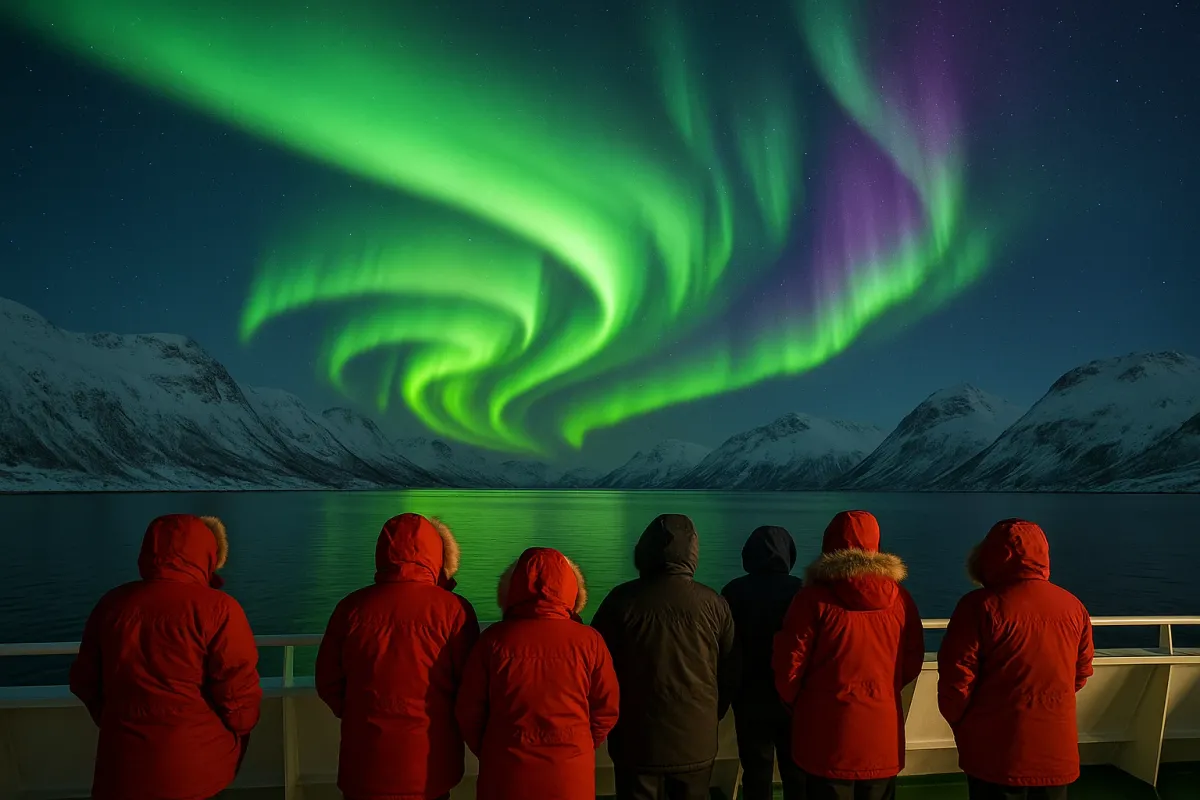
For many travelers, the Northern Lights are a once‑in‑a‑lifetime spectacle. As recent travel features spotlight prime Arctic viewing—from Tromsø to remote Finnish Lapland—the renewed global fascination with aurora tourism is unmistakable. Land‑based safaris are surging in popularity, but what the headlines often miss is that some of the most exclusive, unhurried, and soulful encounters with the aurora now happen from the deck of a ship.
With aurora activity expected to remain strong as we approach the peak of the solar cycle, this is a particularly compelling moment to curate a Northern Lights cruise with intent. Rather than leaving your experience to chance, a few well‑considered decisions—around timing, itineraries, and even what you wear on deck—can sharply increase both your odds of seeing the lights and the elegance with which you do so.
Below, five refined, aurora‑centric insights to help you translate today’s land‑based Northern Lights buzz into an exceptional seaborne experience.
Curate Your Latitude: Why Routes Trump Ship Size for Aurora Hunters
As travel writers share their personal “best places to see the Northern Lights,” you’ll notice the same latitudes recurring: northern Norway, Iceland, Greenland, and the Arctic fringes of Canada. For cruise travelers, this translates into a clear principle—prioritize itinerary over tonnage or brand.
Lines such as Hurtigruten, Havila Voyages, Viking, and selected expedition operators design winter and shoulder‑season sailings that deliberately hug the auroral oval, particularly along Norway’s coast between Tromsø, Alta, and Kirkenes. The ship becomes a mobile observatory, continually repositioning under clearer skies while land‑based travelers stay tethered to a single valley or fjord. When evaluating itineraries, look for overnights or late departures in high‑latitude ports rather than quick daytime calls; these give you multiple viewing windows without sacrificing comfort. A modest‑sized expedition vessel or coastal ship with extensive open decks will often serve you better than a mega‑liner that rarely ventures into true aurora territory.
Time Your Voyage to the Solar Cycle, Not Just the Season
Recent articles on aurora travel increasingly reference the solar cycle—the roughly 11‑year rhythm of solar activity that drives the intensity and frequency of Northern Lights displays. With scientists highlighting the current approach to solar maximum, serious aurora chasers are timing their trips accordingly. Cruise travelers should do the same.
The classic window for ship‑based Northern Lights viewing is late September through March, when nights are long and skies can be crystal‑clear, especially around the new moon. But within that range, align your cruise with periods of higher solar activity tracked by organizations like NOAA’s Space Weather Prediction Center. Some expedition lines and boutique operators now quietly schedule “aurora‑enriched” departures during statistically active periods, without marketing them overtly. Ask your cruise consultant or the line directly whether they factor solar forecasts into their winter or early‑spring sailings. Marrying seasonality with solar science transforms your voyage from a hopeful attempt into a carefully targeted pursuit.
Choose Ships That Treat the Night Sky as a Signature Experience
As Northern Lights travel trends across Instagram and TikTok, more cruise lines are responding with curated sky‑driven experiences. For discerning passengers, the difference lies in how deeply the ship itself is designed to support nocturnal viewing, rather than simply announcing “Northern Lights cruises” in the brochure.
Seek vessels with wraparound promenades, heated or partially sheltered outdoor decks, and low‑glare lighting that preserves night vision. Some ships sailing Arctic routes dim exterior lights on clear nights or offer “aurora alerts” via in‑cabin phone or app, allowing you to slip from suite to deck in minutes. Others enhance the experience with onboard astronomers, Nordic mythology talks, or late‑night hot chocolate and mulled‑wine service on the rail. These touches, while subtle, transform a chilly wait in the dark into something closer to a private salon under the stars. When researching, read beyond the marketing page; delve into recent passenger reviews and look for mentions of actual aurora protocol onboard, not just the promise of a route.
Dress and Pack for Elegance at Minus Ten: The Quiet Luxury of Being Truly Warm
Current Northern Lights features often emphasize the cold—but rarely address how to be both impeccably warm and comfortably stylish when you step onto a midnight deck. On a ship, you may shift rapidly from a Michelin‑leaning dinner to an emergency aurora sighting call, so your wardrobe needs to pivot as gracefully as you do.
Think in layers with a tailored sensibility: a fine merino or cashmere base layer under a slim turtleneck, insulated yet streamlined trousers, and a high‑quality down or wool coat in a dark, non‑reflective tone to avoid glare in photographs. Add a cashmere beanie, touchscreen‑compatible leather or insulated gloves, and lined boots with excellent grip for frosted decks. For photography, pack a compact mirrorless camera with a fast wide‑angle lens and a small travel tripod; today’s viral aurora shots are rarely captured on phones alone, no matter how impressive the marketing. Warm pockets, discreet hand warmers, and a thermos‑compatible mug from the bar complete the ensemble, ensuring you can linger on deck as long as the sky demands without sacrificing poise.
Master the Fine Art of Flexibility: Building an Itinerary That Can Adapt to the Sky
One of the most compelling insights from recent first‑person aurora reports is how quickly conditions change: clouds roll in, solar winds spike unexpectedly, and perfect forecasts can dissolve into grey. On land, travelers scramble for last‑minute van tours; at sea, the most thoughtfully planned cruises embrace flexibility by design.
When selecting your voyage, favor itineraries that build in sea days or slow coastal segments, giving the captain latitude to reposition for clearer skies without jeopardizing port schedules. Expedition‑style cruises are particularly adept at this, often adjusting timing or routing based on real‑time forecasts. As a passenger, mirror that flexibility ashore: avoid over‑scheduling heavy, late‑night excursions in every port, and keep your evenings relatively open so you can respond to sudden aurora alerts. Treat spa bookings, cocktail tastings, and wine‑paired dinners as delicious daytime or early‑evening pursuits, leaving your nights elastic. In a season when Northern Lights travel is trending worldwide, the true luxury is not simply being in the right region—it is having the freedom onboard to let the sky dictate your rhythm.
Conclusion
As social feeds fill with ethereal green ribbons and travelers race northward in pursuit of the aurora, the cruise world offers a quieter, more considered way to join the moment. By aligning your voyage with the realities of the solar cycle, choosing ships that honor the night sky, and curating both wardrobe and schedule with intention, you transform a popular travel trend into something far more personal and enduring.
The Northern Lights will always retain an element of caprice—that is part of their allure. But with the right ship, the right route, and a few quietly sophisticated choices, you can give yourself not just a chance of seeing them, but the privilege of meeting them in a way that feels entirely your own.
Key Takeaway
The most important thing to remember from this article is that following these steps can lead to great results.