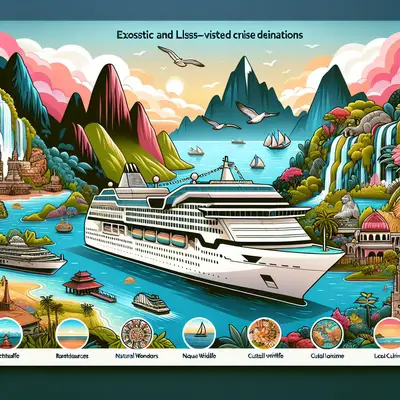
Some itineraries are designed to impress; others are designed to linger in the mind long after the suitcase is unpacked. For the seasoned cruiser, the true luxury is no longer the infinity pool or the oversized suite—it is the rarity of place, the precision of timing, and the discretion of experiences that feel almost impossible to replicate. This is where destinations cease to be mere ports of call and become finely tuned chapters in a larger narrative at sea.
In this piece, we explore a more nuanced map: five destination-driven insights that help transform a cruise from “well planned” to exquisitely curated. Each insight pairs geography with timing, culture with discretion, and classic favorites with measured, often-overlooked alternatives.
Reading the Map Differently: Latitude, Season, and the Art of Empty Space
The most sophisticated itineraries are often less about where you go, and more about when and how you arrive. A harbor that feels overcrowded in high summer can feel almost private at the shoulder of the season, when the light is lower, the air is clearer, and local life quietly resumes its natural rhythm.
This is particularly evident in the Mediterranean, where late-October sailings can reveal a calmer, more authentic version of Santorini, Dubrovnik, or the Amalfi Coast. Restaurants refocus on their regulars, hoteliers exhale, and the ratio of residents to visitors realigns. In Northern Europe, early autumn Baltic journeys can replace coach queues with crisp air, golden light, and museum galleries that encourage lingering instead of rushing.
Even warm-water classics such as the Caribbean can be reframed with nuance. Opting for southern Caribbean routes in late spring rather than high winter, or choosing calls on more southerly islands such as Grenada or St. Vincent, can mean trading crowded marquee beaches for quieter coves—often with better visibility for snorkeling and diving. The sophisticated cruiser learns to read destination calendars with the same precision as wine vintages: year, month, and micro-season matter.
Beyond the Postcard: Ports That Reward Intellectual Curiosity
For those who find heritage as compelling as scenery, some ports quietly outshine their more photographed neighbors. Valletta, Malta, for instance, is more than a pretty fortressed harbor; it is a compact capital layered with the legacy of the Knights of St. John, baroque architecture, and a maritime history that anchors the central Mediterranean. A thoughtfully planned day here might pair a private architectural walk of the Upper Barrakka area with a late-afternoon visit to the Co-Cathedral, when the tour groups have thinned and the Caravaggios can be appreciated in relative calm.
In the Baltic, smaller ports like Tallinn and Riga can eclipse the better-known cities for those who value detail over spectacle. Within their UNESCO-listed old towns, Hanseatic-era buildings and art nouveau masterpieces sit close enough to explore on foot, allowing you to swap bus tours for a guided stroll with a local historian—or, for the independently minded, a carefully researched self-guided route with planned café interludes.
Farther afield, destinations such as Nagasaki, Yokohama, or Hakodate in Japan offer layers of history and design that repay attentive exploration. Rather than merely sampling a “highlight” temple or market, the more discerning approach might be to anchor each port day around a single theme—Meiji-era architecture, local ceramics, or seafood markets at dawn—and allow the narrative to unfold with depth rather than breadth. The result feels less like tourism and more like a brief, meaningful residency.
The Quiet Luxury of Secondary Harbors and Tender-Only Gems
Some of the most satisfying cruise experiences unfold not in capital cities but in secondary harbors that larger ships bypass. These smaller ports often lack the infrastructure to handle mega-vessels—and that is precisely their appeal. Here, the cruise ship feels less like a floating resort and more like a visiting yacht, tolerated and occasionally welcomed by a community more focused on its own rhythm than on visitor volume.
In the Greek Islands, this might mean trading Mykonos for Syros or Naxos, where harbors are scaled to fishing boats and ferries rather than fleets of tour coaches. In Norway, it could mean time in smaller fjord villages instead of only the headline city of Bergen. In French Polynesia, tendering ashore to Rangiroa or Fakarava offers a dramatically different experience than a single-day call at Papeete, with world-class diving and reef environments that feel almost private.
These ports often shine when approached with a lighter touch: a pre-arranged local driver instead of a full-day tour, a reservation at a family-run restaurant, or a deliberately unstructured morning to simply walk, observe, and step into whatever café, gallery, or waterfront path calls to you. The luxury here is the sense that the destination has not been entirely choreographed for you—your own choices still shape the day.
Pairing Ship and Shore: Matching Vessel Personality to Destination Mood
The most satisfying itineraries are not only about where you go, but which type of ship takes you there. A sleek, yacht-style vessel threading the Dalmatian Coast creates an entirely different experience than a larger ship moored outside Venice. For the discerning cruiser, this becomes less a matter of brand loyalty and more about choosing the right tool for the geography.
In highly trafficked areas—Caribbean hubs, major Mediterranean cities—ships with strong onboard cultural programming, smaller passenger counts, and efficient tender operations can transform a familiar destination. When a port is crowded, retreating to a well-designed ship that offers regionally informed dining, curated wine lists, and guest lecturers can make the “return to the vessel” feel as rewarding as the time ashore.
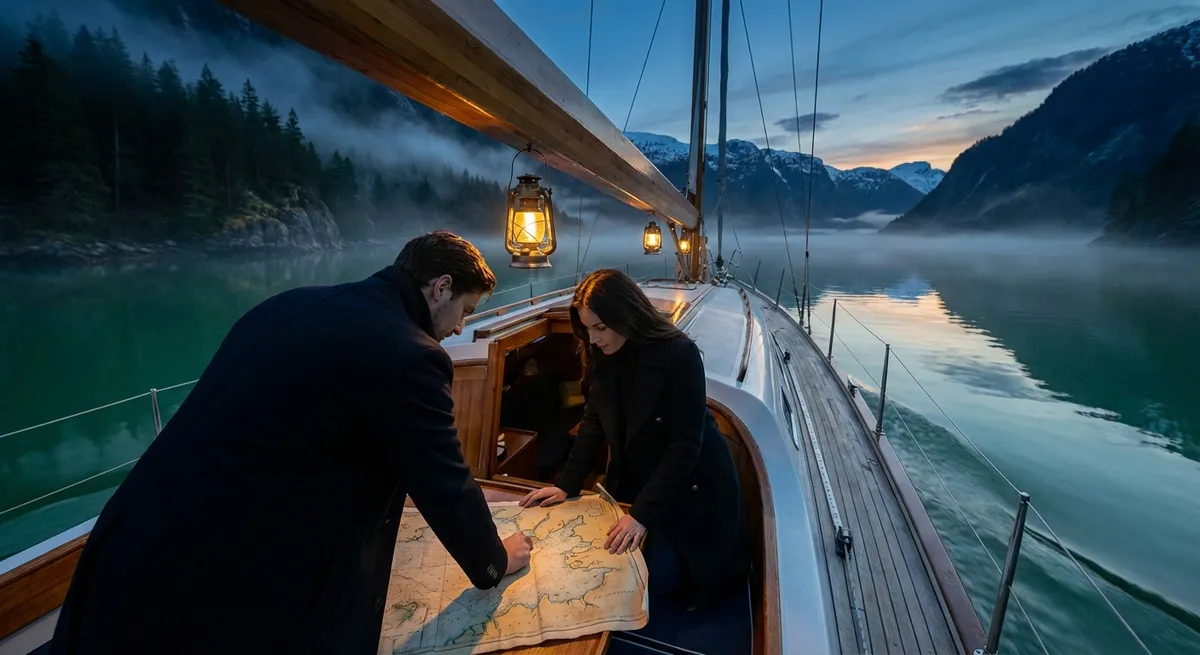
Conversely, for more remote or expedition-style destinations—think Greenland, the Chilean fjords, or the Kimberley in Western Australia—ice-class vessels, Zodiac capabilities, and strong expedition teams can open up coastlines that would otherwise be inaccessible. Here, the cruise is less about shopping streets and more about geology, wildlife, and the kind of stillness that reshapes one’s sense of scale. Aligning ship design, onboard expertise, and destination type ensures that sea days and port days work in harmony rather than competition.
Curating Private Moments in Public Destinations
Even in the world’s most photographed port cities, there is space for privacy and subtlety with the right approach. The key is to design the day around time and perspective rather than simply checking off landmarks. In cities such as Barcelona, Lisbon, or Istanbul, early departures from the ship—well before the first motorcoach queues—can deliver nearly empty squares, quiet tram rides, and local cafés just opening for the day.
Advance planning can also elevate familiar destinations into something quietly memorable. Securing timed museum entries for the first or last slots of the day, arranging a sommelier-led tasting at a vineyard rather than a standard group tour, or reserving a table at a restaurant with a view back to your ship at sunset can all transform a port call into a personal occasion rather than a shared photo opportunity.
For beach and nature-focused itineraries, private cabanas, low-traffic trails, or lesser-known lookouts can preserve a sense of exclusivity even in popular ports. Local guides, when thoughtfully chosen, can open doors that are otherwise invisible: a family-owned olive mill in the Peloponnese, a small design studio in Copenhagen, or a traditional ryokan-style lunch in a quieter corner of Kyushu. Instead of chasing everything, you are quietly editing, selecting only those moments that feel worth remembering.
Conclusion
For the cultivated cruiser, destination selection has become a subtle, almost bespoke craft. It is no longer enough to tick off icons; the true pleasure lies in aligning season, ship, harbor, and personal interest into a coherent whole. It means reading past the brochure headlines to uncover shoulder seasons, secondary ports, and ports that reward genuine curiosity.
Cruising at this level is less about spectacle and more about proportion—the balance between crowd and quiet, city and village, landmark and side street, ship and shore. When done well, the voyage becomes a carefully composed journey through coastal realms that reveal themselves not to the busiest traveler, but to the most attentive one.
Sources
- UNESCO World Heritage Centre – World Heritage List – Authoritative overview of culturally and historically significant sites mentioned (e.g., Valletta, Riga, Tallinn).
- Malta Tourism Authority – Visit Malta – Official destination information on Valletta, cultural heritage, and seasonal travel considerations.
- Japan National Tourism Organization (JNTO) – Detailed guidance on ports such as Nagasaki, Yokohama, and Hakodate, including cultural and historical context.
- Norwegian Fjords – Visit Norway – Insight on fjord villages, seasonality, and smaller coastal communities beyond the major hubs.
- U.S. National Oceanic and Atmospheric Administration (NOAA) – Climate Data Online – Reliable climate and seasonal data to support planning around shoulder seasons and less crowded travel windows.
Key Takeaway
The most important thing to remember from this article is that this information can change how you think about Destinations.