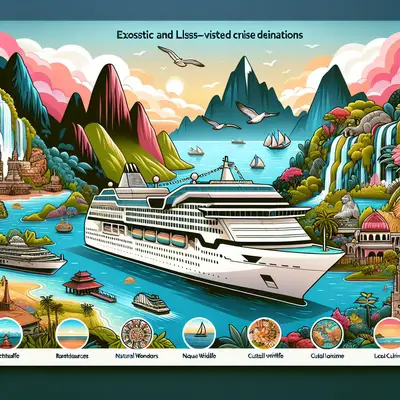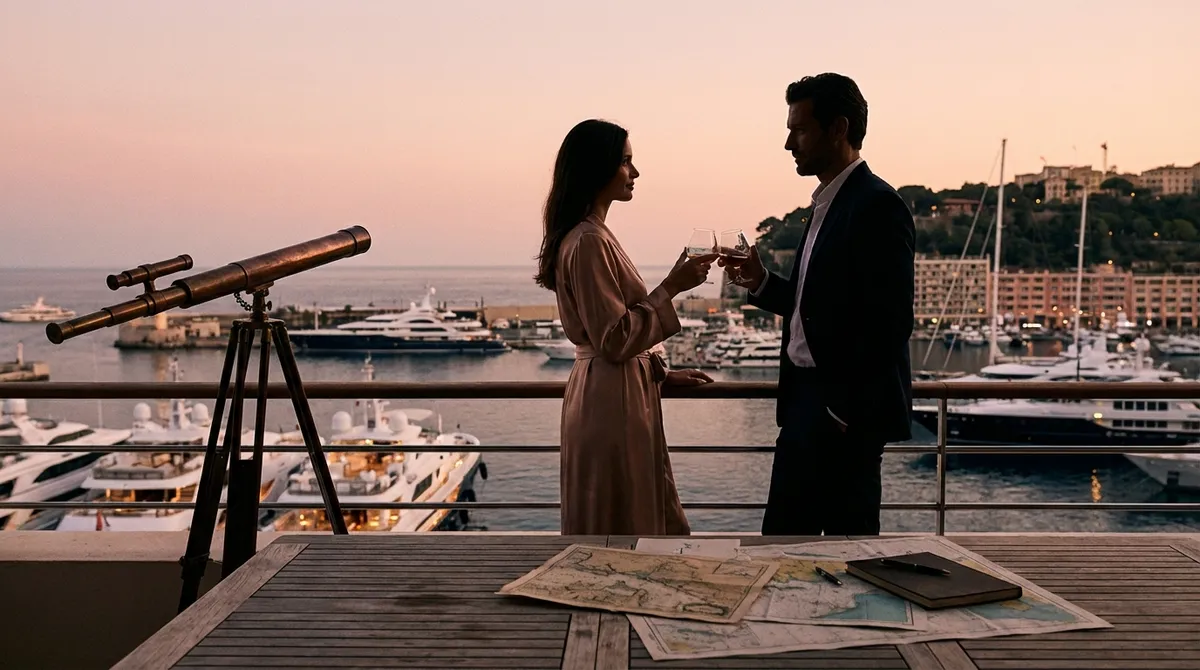
There are destinations that appear on itineraries, and then there are destinations that reveal themselves only to those who know how to look. For the discerning cruiser, the choice of port is less about ticking off capitals and more about curating a sequence of quiet revelations: a harbor where the ship’s reflection is the only ripple at dawn, a vineyard that still remembers the names of its pickers, a cove where the tender is the only vessel allowed to disturb the water. This is a voyage not of spectacle, but of calibration—selecting destinations where luxury is measured in time, access, and the texture of the experience itself.
The Art of the “Second-City” Port
Truly sophisticated itineraries often bypass the obvious showcase ports in favor of their more nuanced neighbors. Instead of Barcelona, think Palma de Mallorca or Valencia; instead of Dubrovnik at noon, consider Šibenik or Kotor at sunrise. These second-city ports are rarely second-best—rather, they offer a quieter stage on which to experience a region without the choreography of mass tourism.
You’ll find smaller, locally owned restaurants still willing to improvise a tasting menu, galleries where the artist is behind the counter, and waterfront promenades where the only queues are for gelato. For high-end cruisers, this translates into more authentic interactions, less time spent navigating crowds, and greater flexibility to arrange bespoke experiences—private cooking classes, architectural walks, or vineyard visits that haven’t yet appeared on every influencer’s feed. When reviewing itineraries, look not only at the marquee names, but at the supporting cast of secondary ports; they often hold the most refined rewards.
Exclusive Insight #1: The most memorable luxury often lives in the “nearby but not famous” port—choose itineraries that favor characterful second cities over the obvious headliners.
Timing the Destination: The Luxury of the Off-Hour Arrival
Luxury at many celebrated ports is not a question of where, but when. A harbor that feels overrun at 11:00 a.m. can be almost ethereal at 7:00 a.m., when shutters are just lifting and the only other witness to the light is a barista polishing glassware. High-end lines and thoughtfully curated voyages increasingly design calls around this principle: extended hours in port, late departures, or sunrise arrivals that recast familiar cities in a private light.
In destinations like Santorini, Venice (where permitted), or Monte Carlo, a pre-breakfast walk can feel like gaining access to a parallel city. Similarly, late-evening departures from Mediterranean ports or Baltic capitals allow you to experience twilight terraces, opera performances, and quiet harbor views after other ships have sailed. Ask not just which ports your journey visits but how long and when you’ll be there; the answer often distinguishes a merely good itinerary from a genuinely elevated one.
Exclusive Insight #2: Prioritize itineraries with extended or unusual port hours—dawn arrivals and late-night departures effectively turn a crowded destination into a near-private experience.
Micro-Regions at Sea: Designing a Thematic Voyage Within a Voyage
The most sophisticated cruisers no longer see a sailing as a simple sequence of unrelated stops. Instead, they curate micro-themes that run through a set of ports—creating a personal “voyage within the voyage.” In the Adriatic, that might mean tracing the legacy of Venetian trade across Koper, Zadar, and Kotor; in the Eastern Mediterranean, following the arc of ancient theater from Taormina to Epidaurus. In Northern Europe, a Baltic itinerary can become a focused exploration of design, architecture, or modern cuisine.
The practical advantage is subtle but powerful: by framing consecutive ports through a shared lens, you deepen the experience without adding complexity. A wine-focused cruiser might build a continuum from the Douro Valley near Porto to sherry bodegas in Cádiz and vineyards in Provence, pre-arranging private tastings in each. A lover of contemporary art could weave a path through museums and galleries in Rotterdam, Copenhagen, and Oslo. Your ship becomes a moving base camp for a single, beautifully coherent theme that unfolds from shore to shore.
Exclusive Insight #3: Choose itineraries where 3–5 successive ports can be linked by a personal theme—wine, architecture, performance, or design—to transform disjointed calls into a curated, narrative journey.
Under-the-Radar Harbors with Ultra-High Yield Experiences
Some ports may not be globally famous, yet offer experiences that rival—or surpass—the marquee names in exclusivity and depth. Consider small Norwegian villages that serve as gateways to privately guided fjord kayaking, or lesser-known Greek islands where a single family-owned taverna can organize a secluded beach feast reached only by local fishing boat. In French Polynesia, secondary islands beyond Bora Bora can provide coral gardens virtually to yourself, guided by locals who know every contour of the lagoon.
Discerning travelers seek destinations where the infrastructure for authentic, high-touch experiences exists but hasn’t yet been commodified. These harbors often have a single standout hotel, a revered restaurant, or a boutique vineyard that quietly attracts chefs, sommeliers, and in-the-know travelers. Work with your cruise line’s concierge, or an independent luxury travel advisor, to identify such ports on your route and secure reservations or private access before they become widely known.
Exclusive Insight #4: Look for ports with one or two standout, quietly celebrated experiences—an iconic inn, a cult winery, a chef’s table—where access can be individualized and genuinely special rather than mass-produced.
The Quiet Power of Embarkation and Disembarkation Cities
For many travelers, the embarkation and disembarkation ports are logistical necessities. For connoisseurs, they are anchors of the experience—and often deserve as much attention as any port of call. Cities like Lisbon, Vancouver, or Singapore offer a nuanced pre- and post-cruise canvas for gastronomy, design-forward hotels, and deeply local cultural experiences that set the tone for the voyage or extend its afterglow.
Arriving a day or two early allows you to adjust to the destination’s rhythm: a morning in a neighborhood café, a private museum tour before public opening, or a tasting menu reserved months in advance. Similarly, remaining in the disembarkation city transforms the final day from an abrupt end into a soft landing—perhaps with a night in an urban retreat hotel, a spa day, or a final, unhurried dinner that reflects on the journey just completed. The most refined itineraries are those where the cities at either end of your route feel like intentional pillars, not afterthoughts.
Exclusive Insight #5: Treat embarkation and disembarkation cities as integral “bookend destinations” and invest in them—your voyage’s first and last impressions are disproportionately shaped by how you experience these ports.
Conclusion
In an era when ships themselves increasingly resemble floating destinations, the truly cultivated cruiser knows that the ports still matter—perhaps more than ever. Luxury at sea is not only found in thread counts and tasting menus, but in the way an itinerary is composed: second-city harbors that whisper rather than shout, off-hour arrivals that transform crowded icons into private stages, thematic threads that bind distant shores into a single continuous story, and modest-looking ports that conceal world-class, under-the-radar experiences.
When you begin to read destinations this way, a cruise ceases to be a list of stops and becomes something altogether more considered: a cartography of indulgence drawn not in broad strokes, but in fine lines. The ship carries you; the ports define you. And in the quiet spaces between one harbor and the next, you will find that the true luxury lies in how thoughtfully each destination has been chosen—and how deliberately you choose to experience it.
Sources
- U.S. Department of State – Travel Advisories - Authoritative guidance on safety and practical considerations for international ports
- UNESCO World Heritage Centre - Detailed information on cultural and natural heritage sites frequently visited on cruise itineraries
- Cruise Lines International Association (CLIA) - Industry data and research on cruise trends, deployment regions, and destination patterns
- European Travel Commission - Insights into European destination trends, including secondary cities and emerging ports
- Singapore Tourism Board - Example of a major embarkation/disembarkation city’s official guidance on experiences and planning
Key Takeaway
The most important thing to remember from this article is that this information can change how you think about Destinations.