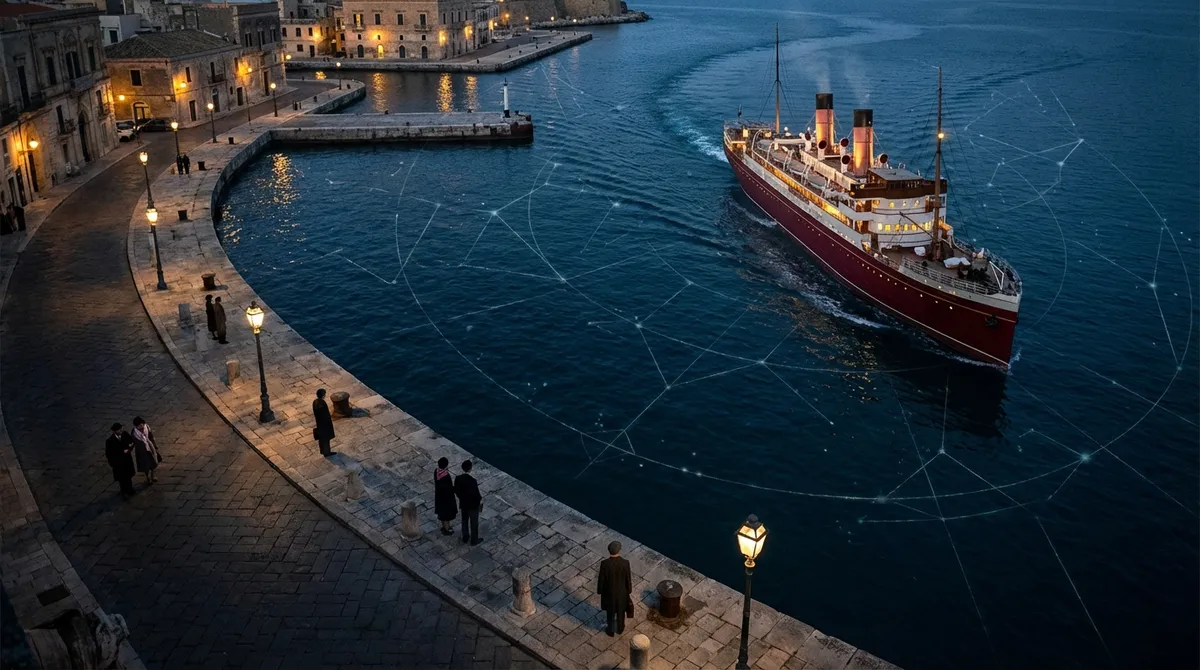
The most interesting destinations at sea are no longer merely dots on a map; they are trajectories—approaches, anchorages, and carefully timed entries that transform familiar names into private discoveries. For the sophisticated cruiser, the question is less “Where are we going?” and more “How, when, and from which angle will we arrive?” In an era when marquee ports can feel oversubscribed, the most rewarding itineraries now rely on nuance: cunning routes, off-hours arrivals, and lesser-known harbors that reveal a destination’s true character with almost conspiratorial subtlety.
When the Approach Is the Destination
The experience of a place begins long before the gangway is lowered. A thoughtfully designed sea approach can be more revealing than any city tour—if you know what to look for.
Consider the sail-in to Quebec City along the St. Lawrence River in late autumn. A deft itinerary will time the upriver passage to dawn, when low light collects in the folds of the Laurentian hills and the spires of Old Quebec appear gradually, almost theatrically, above the river mist. A similar magic unfolds when entering Lisbon via the Tagus at first light: the April 25th Bridge, the Cristo Rei statue, then finally the Alfama quarter cascading down to the water, all appearing in a sequence that feels curated rather than incidental.
Premium cruise planners now treat approaches as “moving viewpoints,” adjusting speed and timing to choreograph panoramas: lingering off Montenegro’s Bay of Kotor as morning fog lifts from the surrounding karst mountains, or pacing the transit into Tokyo’s Yokohama port so Mount Fuji, on a clear day, becomes a slow, unfolding presence on the horizon. Guests who rise early, step onto a forward-facing deck, and watch these maritime overtures often describe them as the most indelible memories of the voyage.
Micro-Ports Near Icons: A Different Door into Famous Regions
One of the most discreet luxuries at sea is not skipping famous regions, but entering them through quieter doors. Rather than docking directly in marquee cities, highly considered itineraries now pair those hubs with smaller satellite ports that offer more local texture and less spectacle.
In the Adriatic, this might mean anchoring at Korčula or Vis instead of only calling at Dubrovnik or Split, letting guests absorb Croatia’s coastal culture without the weight of day-trip crowds. Around the Mediterranean’s French and Italian Rivieras, sophisticated routings will treat Cannes and Monaco as punctuation, not the entire sentence, balancing them with calls at Sanary-sur-Mer, Portovenere, or the Tuscan port of Porto Santo Stefano—harbors where fishing boats outnumber megayachts and café conversations remain in the local language.
Even in northern Europe, this principle holds. A Baltic itinerary that includes Nynäshamn for Stockholm or Skagen alongside Copenhagen allows for quieter, village-scale impressions of the region—fishing culture, artists’ colonies, and working harbors—before or after the architectural brilliance of its capitals. The result is a layered understanding of a destination: iconic city framed by intimate hinterland.
The Art of Seasonal Mismatch
The most rewarding cruise destinations are not always best in their textbook season. A growing number of discerning travelers are embracing what might be called “seasonal mismatch”: visiting classic regions deliberately off-peak to experience them in a different emotional register.
The Greek Islands in October and November feel almost like a private archipelago, with softened light, still-warm seas, and less frenetic nightlife. Sailings through Norway’s fjords in late winter or early spring may trade lush greenery for austere, snow-bright cliffs and the potential for northern lights—an entirely different kind of theater. Japan’s Seto Inland Sea, often associated with cherry blossoms, can be quietly compelling in late autumn, when the islands’ art installations and fishing communities are bathed in sharper, cooler light and the summer crowds have dissipated.
For the cruiser who values depth over spectacle, this seasonal inversion offers several advantages: a more receptive local community, less pressure on shore infrastructure, and more genuine interaction with place. The sea itself behaves differently too—swell patterns, winds, even the angle of sunrise and sunset shift, creating a sense that you have been allowed into a destination’s off-duty hours.
Port Days as Curated Chapters, Not Checklists
As itineraries grow more ambitious, the most satisfying port days feel less like errands (“see this, photograph that”) and more like elegantly paced chapters within a larger narrative. This shift from checklist to curation is subtle but profound.
In ports such as Valencia, Trieste, or Halifax—cities with rich, walkable cores—thoughtful travelers now favor one or two deeply considered experiences over breadth. A morning of structured exploration with a small, well-briefed guide (architecture, culinary culture, or maritime history), followed by a deliberately unprogrammed afternoon to revisit a single neighborhood café or waterfront promenade, can yield a more nuanced sense of place than a flurry of excursions.
Some premium lines are responding with staggered, tiered offerings that allow guests to layer their experience: morning market visits with a ship’s chef followed by an onboard regional cooking demonstration; private museum access capped by a sunset harbor cruise in a local vessel; or extended evenings in port aligned with the city’s own rhythms, allowing dinner ashore at the hour locals actually dine. The destination is no longer reduced to a rushed daytime snapshot but becomes an integral, paced segment of the voyage’s overall storyline.
Five Exclusive Insights for the Discerning Destination Seeker
Beyond broad trends, a few specific, insider-oriented principles can quietly transform the way you choose and experience cruise destinations:
Follow Working Harbors, Not Just Tourist Icons
Itineraries that include or sail past working ports—think Genoa instead of only Portofino, Piraeus’ outer docks as well as Santorini’s caldera, or Antwerp alongside Amsterdam—offer a more honest view of maritime life. Watching container traffic, pilot boats, and ferries interweave with your ship is a reminder that the sea is an economic artery as much as a scenic backdrop.
Prioritize Late Departures Over Extra Ports
An itinerary with fewer calls but multiple late-night or overnight stays can be far more sophisticated than a packed schedule of brief visits. Look for itineraries where cities like Barcelona, Haifa, Bergen, or Ho Chi Minh City are given elongated time windows, allowing for twilight walks, proper restaurant dinners, and insight into a destination’s nocturnal personality.
Seek Out “Transit Experiences” as Highlights, Not Just Logistics
Canal and narrow-sea transits—the Panama Canal, Kiel Canal, Chile’s fjords, Alaska’s Inside Passage, or the Dardanelles and Bosphorus—are often treated as passages between “real” destinations. In practice, they can be the intellectual and visual high points of a journey, rich with engineering, geopolitics, and constantly shifting vistas. A balcony or forward deck, a chart, and a good annotated guidebook can turn these days into masterclasses in geography and history.
Use Secondary Airports and Rail Hubs to Unlock Refined Embarkations
Some of the most relaxed embarkation ports—Civitavecchia for Rome, Southampton for London, Yokohama for Tokyo—are best accessed via secondary airports or rail connections, avoiding capital-city congestion. Pairing, for example, a flight into Florence or Bologna before a Rome-area sailing, or using Germany’s Hamburg or Lübeck rail connections before a Baltic cruise, can create a more graceful transition from land to sea and open up lesser-known pre-cruise stays.
Treat Repeated Ports as Evolving Relationships
Seasoned cruisers often return to the same harbors—Athens, Vancouver, Singapore, Marseille—without repeating the same experience. With each visit, shift your focus: one call devoted to food markets and contemporary art, another to industrial waterfronts and local transit, a third to neighboring villages or islands. Over time, the city ceases to be a “stop” and becomes a recurring character in your traveling life, deepening the sense of continuity between journeys.
Conclusion
Destinations in the modern cruising world are no longer defined solely by their names on brochures but by the manner in which we approach, sequence, and inhabit them. The sophisticated traveler looks beyond headline ports to the finer grain: the hour of arrival, the angle of entry, the choice of micro-port, the willingness to visit places in their so-called “off” season, and the discipline to curate fewer, better experiences ashore.
In this cartography of desire, the most rewarding itineraries feel almost literary—chapters that speak to each other, recurring motifs of coastlines and cultures, and a deepening relationship with the sea as both stage and subject. For those willing to think a step beyond the obvious, each voyage becomes less a string of stops and more an evolving conversation with the world’s coasts, harbors, and hidden inlets.
Sources
- UN World Tourism Organization – Cruise Tourism: Current Situation and Trends - Provides data and analysis on global cruise tourism patterns and seasonality
- CLIA (Cruise Lines International Association) – 2024 State of the Cruise Industry Report - Industry overview on emerging cruise destinations and guest preferences
- Port of Quebec – Cruise Information - Details on cruise approaches, seasonality, and port characteristics for Quebec City
- Visit Norway – Fjords and Coastal Cruising - Background on Norway’s fjord regions, ideal seasons, and coastal experiences
- Panama Canal Authority – Transit FAQs - Technical and operational insights into Panama Canal transits that enhance understanding of this classic sea route
Key Takeaway
The most important thing to remember from this article is that this information can change how you think about Destinations.