Some destinations reveal their character only when approached over water. The slow advance of a ship toward a historic skyline, the silhouette of mountains rising behind a layered harbor, the subtle transition from open sea to cultured shore—these are experiences that aircraft simply erase. For the discerning cruiser, certain coastal cities are not merely ports of call; they are grand theatres, designed to be entered by sea and savored in carefully curated intervals.
This is an exploration of those rare destinations that reward a maritime approach, with five exclusive insights that seasoned cruise enthusiasts can quietly leverage for deeper, more composed experiences.
Approaching the City as a Performance: The Art of the Arrival
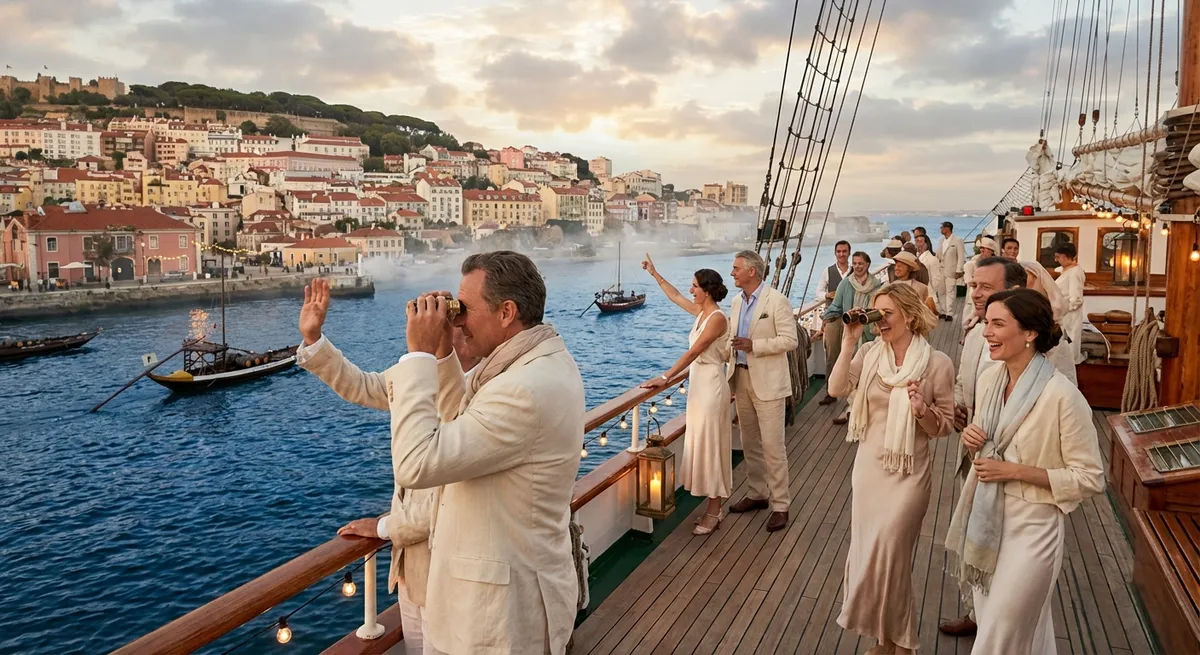
Long before you set foot ashore, the city begins. For ports such as Venice (when reached via approved maritime routes), Lisbon, Sydney, and Cape Town, the approach itself is a kind of prologue—an overture of light, architecture, and topography.
On a refined voyage, treat arrival as an event, not a logistical step. Step onto deck well before scheduled docking; the most atmospheric moments are often 30–45 minutes before the pilot boat arrives. In Lisbon, you’ll slip beneath the 25 de Abril Bridge as the morning sun burnishes the tiled facades of Alfama. In Sydney, the harbor narrows into a perfect tableau, where the Opera House and Harbour Bridge align as if composed for your vantage point alone. These perspectives are fleeting; once alongside the pier, the geometry changes and the drama quietens.
Cultivated travelers will often keep a slim, weather-resistant notebook or digital journal at hand during these arrivals—not for exhaustive entries, but for small fragments: the exact color of the water under an awakening sky, the layered bells of a hillside city, the way a fort or lighthouse announces the harbor’s edge. These details, captured at the moment of approach, become a private index to the city’s true character.
Layered Time in Port Cities: Reading History from the Waterline
Exceptional cruise destinations share one particular trait: their stories are legible from the waterline. From Québec City’s cliffs to Valletta’s bastioned walls, the best ports allow you to read centuries of commerce, conflict, and culture in a single panoramic sweep.
Rather than rushing into the modern city, begin by understanding how the harbor once functioned. In ports like Dubrovnik, Cartagena (Spain), or Valletta, a short, well-chosen harbor tour or tender crossing before you wander ashore gives you the historical shape of the place—where ships anchored, where cargo landed, where fortifications faced outward. Notice how some modern cruise terminals sit at a remove from the old quays; taking a moment to stand by the original waterfront, where sail-powered vessels once tied up, subtly recalibrates your sense of scale and time.
Here, local maritime museums and waterfront archives are invaluable. In cities like Amsterdam, Hamburg, and Genoa, these institutions hold models, charts, and archival photographs that reveal what your harbor looked like a century—or several centuries—ago. Even a brief visit can transform a simple stroll into a dialogue with the past: you are not just walking a promenade, you are tracing former docks, customs houses, and shipyards that once defined the city’s fortunes.
Five Discreet Insights for the Experienced Cruise Guest
Beyond the obvious advice—avoid the busiest hours, book priority tenders—seasoned cruisers can employ more subtle strategies to unlock richer experiences in port. These five exclusive insights favor nuance over novelty, and quiet advantage over spectacle:
Exploit the Half-Tide Hours
Many coastal cities are most atmospheric—and least congested—between the end of morning tours and the initial wave of late-lunch reservations. In European ports, this often means stepping out between 11:00 and 12:30. Cafés are calm, shopkeepers are unhurried, and historic districts briefly exhale after the early tour groups. In Mediterranean and Northern European ports alike, this is the ideal window for meaningful, unpressured encounters: a conversation with a gallery owner, a tasting at a small wine bar, a visit to a local bookshop where staff still have time to recommend regional authors.
Reserve One Experience Entirely Off the Cruise Grid
For every call, identify a single, hyper-local experience that is unlikely to be on any group excursion: a neighborhood bakery with a daily 10:00 pastry ritual; a family-run ceramic studio; a riverside park favored by locals for morning walks. Often, city tourism websites or local newspapers will quietly highlight such places. Committing to just one such “off-grid” anchor in each port ensures that your memory of the city is not entirely shared with several thousand fellow guests.
Use Elevation to Reframe the Harbor
Many great ports reveal their logic from above. In cities such as Funchal (Madeira), Naples, Hong Kong, and Rio de Janeiro, a modest climb—or a carefully chosen rooftop bar, cathedral terrace, or funicular ride—offers a vantage point where sea, city, and surrounding landscape align. Aim for these elevated views during late afternoon, when the harbor begins to reacquire its evening glow and returning tenders leave filaments of foam on the water. Photograph the harbor then, not at midday; what you capture will be layered with atmosphere rather than glare.
Treat the Terminal as a Cultural Threshold, Not a Barrier
Modern cruise terminals can feel generic, but many are now curated as gateways to local culture. Quietly scan for regional design motifs, local artisans’ work, or small exhibits sponsored by nearby museums. In ports such as Rotterdam, Yokohama, or Singapore, installations in or near the terminal can provide a distilled introduction to design, architecture, or maritime heritage that will sharpen your eye once you go ashore. Consider lingering ten minutes to absorb these cues; they often contain the narrative threads your guides and guidebooks overlook.
Sail-Away as Coda, Not Afterthought
Most guests treat sail-away as a social hour; refined travelers approach it as a final reading of the city. Step out on deck 10–15 minutes before scheduled departure and observe the harbor receding in reverse: the working quays, the pilot boat’s choreography, the slow alignment of breakwaters and beacons. In destinations like Stockholm’s archipelago or the fjords of Norway and Chile, this transition from city to open water is as evocative as any scenic cruising segment. Use this time to reconcile your day ashore with the larger geography—where the city sits, how it faces the sea, and how its lights look when the conversation hushes and the coastline becomes line and color.
Destinations That Reward a Maritime Mindset
Some ports are naturally theatrical; others are quietly revealing. Consider a few archetypes that are especially rewarding when approached with a maritime mindset:
- Harbor-Centric Capitals – Copenhagen, Stockholm, Helsinki
These cities evolved around protected waters that still structure their daily life. Ferries, bridges, and waterfront promenades feel integral rather than ornamental. Exploring by local ferry rather than coach not only softens your environmental footprint but yields constant, shifting views of modern architecture, historical shipyards, and discreet residential enclaves.
- Historic Gateways – Valletta, Québec City, Istanbul
Each of these ports once served as a gate—to an empire, a continent, or a riverine interior. Today, their silhouettes (fortifications, palaces, minarets, and ramparts) remain legible from afar. Allow your first and last views to be from the ship’s open decks; the city’s intended, ceremonial “face” was designed to be seen exactly this way.
- Landscape-First Ports – Cape Town, Ushuaia, Santorini
Here the primary impression is not urban but geologic: cliffs, mountains, volcanic calderas framing the harbor. The city is a delicate overlay on a dramatic natural stage. In these ports, short, well-timed walks along the water’s edge—rather than immediate ascents inland—can yield meditative, almost cinematic encounters with horizon, weather, and the constant presence of your anchored ship.
- Working Waterfronts with Quiet Depth – Piraeus, Marseille, Busan
Some guests dismiss major commercial ports as mere gateways to more glamorous hinterlands. Yet these harbors often offer the most authentic maritime character. A brief detour into fish markets, ship chandlers, or dockside cafés frequented by port workers can deliver a sense of place far more vivid than a standard panoramic coach tour. Look for where harbor pilots, stevedores, and ferry crews take their coffee; these are the rooms where the port still breathes in its own language.
Designing a Voyage Around Port Character, Not Just Itinerary
Creating a truly elevated cruise itinerary means thinking beyond “where” and also considering “how” each city reveals itself. When assessing future voyages, read between the lines of glossy brochures:
- Note whether the itinerary includes extended or overnight stays in especially atmospheric ports like Venice (within current regulations), St. Petersburg (when geopolitically viable), or Hong Kong. These overnights allow for night-harbor walks, late dinners ashore, and the rare pleasure of returning to your ship illuminated, waiting on calm water.
- Pay attention to tender ports vs. docked ports. Tender calls in destinations like Santorini, Bora Bora, or some Norwegian fjords offer inherently cinematic perspectives, as you shuttle between ship and shore in constantly shifting light. Docked calls in major cities can compensate with ease of access and refined urban experiences.
- Consider seasonality and light, not just temperature. In northern latitudes, shoulder seasons can offer long twilights that stretch sail-ins and sail-aways into extended, painterly interludes. In the tropics, the drama often condenses into swift, golden hours; you’ll want to be ready on deck precisely when the itinerary lists arrival or departure times.
- Seek voyages that highlight scenic approaches in their descriptions—references to sailing up rivers (like the Elbe to Hamburg or the St. Lawrence to Québec City), passing under iconic bridges, or navigating archipelagos. These clues suggest that the line recognizes the artistry of arrival and departure, not merely the quantity of port calls.
Conclusion
The most memorable cruise destinations are not simply places you visit; they are choreographies of approach, encounter, and departure. Viewed this way, each harbor becomes a living salon where sea, city, and traveler meet on elegantly staged terms.
By treating arrival as performance, reading history from the waterline, and applying a handful of discreet, experience-shaping insights, cruise enthusiasts can transform familiar ports into endlessly nuanced scenes. The ship becomes more than transport; it is a moving balcony from which the world’s great coastal cities quietly unfold, one sophisticated harbor at a time.
Sources
- UNESCO World Heritage Centre – Historic Areas of Istanbul – Background on Istanbul’s historic waterfront and its significance as a gateway city
- UNESCO World Heritage Centre – City of Valletta – Detailed overview of Valletta’s fortified harbor and urban fabric
- Visit Lisboa – Official Tourism – Information on Lisbon’s waterfront neighborhoods and approaches from the Tagus
- Port of Sydney – Passenger Cruise Terminal – Insights into Sydney’s harbor layout and cruise ship approaches to Circular Quay
- City of Stockholm – Archipelago & Maritime Information – Context on navigating the Stockholm archipelago and its relationship to the city’s harbor
Key Takeaway
The most important thing to remember from this article is that this information can change how you think about Destinations.