There are ports that appear on every glossy brochure, and then there are harbors that reveal themselves only when you arrive with time, curiosity, and a willingness to look past the obvious shore excursion. For the refined cruiser, the real luxury often lies not in collecting destinations, but in understanding them—harbors where the rhythm is slower, the details finer, and the most memorable moments unfold between the scheduled highlights.
This is a guide to seaside cities that reward the traveler who disembarks with intention. Woven throughout are five exclusive insights—subtle, often unadvertised advantages—that seasoned cruise enthusiasts quietly leverage to transform familiar ports into deeply personal discoveries.
Ports That Bloom After the Last Tour Bus Leaves
Many marquee cruise ports operate on two distinct clocks: one for the day-tripper, and another for those who linger into the late afternoon and early evening. The latter is where the city often reveals a softer, more authentic side.
In Mediterranean ports like Palermo or Valencia, the transformation after the mass excursions return to the ship is dramatic. Cafés reclaim their tables from hurried tour groups, local families emerge for their passeggiata, and restaurant staff have the bandwidth for genuine conversation rather than rapid table turnover. In Northern Europe, smaller cities—think Tallinn or Ålesund—often feel like different places once the shore-excursion crowds have departed, with quiet side streets, uncrowded museums, and locals less pressed for time.
Exclusive Insight #1: The “Last Tender Quiet Hour”
Veteran cruisers know that the final 60–90 minutes before all-aboard can be the most rewarding window of the day. With most passengers back on board, waterfront promenades and city squares empty out, while golden-hour light softens the entire scene. Bookings at this time—an early apéritif on a harbor terrace in Split, a quick return to a nearly empty gallery in Bergen, or a stroll along Corfu’s old fortress walls—offer a sense of having the destination almost to yourself. When planning your day, deliberately reserve this final segment for something contemplative and unhurried, rather than last-minute shopping or rushing back to the gangway.
Reading a Port Through Its Waterfront Rituals
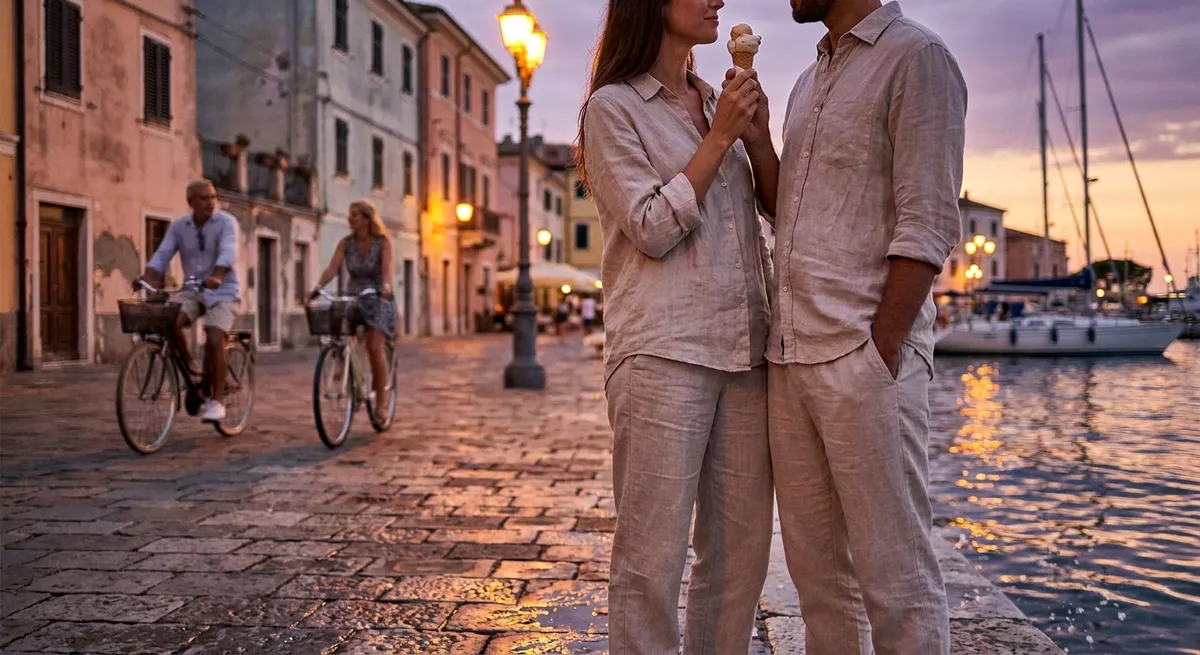
In cities that have grown up around the sea, the waterfront is not a backdrop—it is the city’s living room. For the observant traveler, the harborside can tell you as much about a place as any museum, particularly in smaller or secondary ports where everyday life still revolves around the water.
In the Greek islands, mornings belong to fishermen and café regulars, while afternoons see the harbor transformed into a stage for social life and slow conversation. In Scandinavian ports like Copenhagen or Helsinki, waterfront saunas, swimming piers, and cycle paths reveal a culture of outdoor living that persists well into cooler months. In the Caribbean, port-side rum shops, domino tables, and impromptu music hint at a social fabric far richer than the duty-free corridors suggest.
Exclusive Insight #2: Follow the Working Boats, Not the Tour Boats
A refined way to decode a port: trace where the working vessels originate and unload. Fishing harbors, pilot-boat docks, and small commercial quays often sit just beyond the tourist radius yet remain walkable from the main cruise pier. In places like Funchal, Vigo, or Sète, drifting toward the working waterfront yields understated seafood tavernas, bakeries geared to locals rather than visitors, and harbor bars where the televisions play matches for the crew, not for passing tourists. This is often where you’ll find quietly excellent, unpretentious meals priced for residents, not for the cruise economy.
Micro-Neighborhoods Within Major Cruise Hubs
Some cruise ports are unavoidable because of their convenience and infrastructure: Barcelona, Miami, Singapore, Vancouver. Yet within these heavily trafficked gateways lie micro-neighborhoods that feel worlds apart from the main cruise terminal experience. The key is to think in concentric circles: the immediate port area, the standard tourist belt, and then the pockets that locals choose for their own downtime.
In Barcelona, this might mean bypassing Las Ramblas in favor of the quieter, residential streets of El Born or Sant Antoni for an early lunch. In Miami, heading to the tree-lined pockets of Coconut Grove or the edgy charm of the MiMo District rather than staying tethered to Bayside or South Beach. In Singapore, stepping away from Marina Bay toward the shophouse lanes of Tiong Bahru or the culinary warren of Geylang offers a more textured sense of the city.
Exclusive Insight #3: Use Transit to Buy Authenticity, Not Distance
A sophisticated cruiser treats local public transit—trams in Marseille, ferries in Sydney, metro lines in Lisbon—not simply as a way to reach “attractions,” but as a tool to access local life with surgical precision. A single metro ride often moves you from the cruise bubble into neighborhoods where menus are not translated into six languages and where you are more likely to be seated next to office workers or families than fellow passengers. A rule of thumb: one transit leg away from the terminal yields quieter streets; two legs typically delivers you into the city as residents know it. The refinement lies in balancing time (and your ship’s departure) with the reward of these more grounded districts.
When the Port Itself Is the Destination
Some of the most quietly satisfying cruise calls occur in ports where the town is small enough to cross on foot, anchored by a single harborfront and a compact historic core. These are the places where you can abandon the idea of “seeing the sights” and instead allow yourself the luxury of simply inhabiting the day.
Mediterranean harbors like Nafplio, Hvar Town, or Kotor; Atlantic gems like Saint-Malo or Honfleur; and Nordic enclaves such as Visby or Rønne offer this kind of scale. You can stroll without urgency, return to the ship at will, and treat the town almost like a temporary neighborhood rather than a checklist. The pleasure is cumulative: a morning coffee in one square, a midday glass of wine along the quay, an hour in an unheralded church or small local museum, and time simply watching boats, tides, and people.
Exclusive Insight #4: Choose Intensity Over Quantity in Compact Ports
Experienced cruisers often resist the temptation to “pop in” to multiple attractions in a small port, and instead immerse in one or two experiences in depth. That might mean lingering for an entire afternoon in a single family-run taverna on a Greek waterfront, joining the regulars’ rhythm of coffee, conversation, and late lunch. Or choosing to walk the full perimeter of Dubrovnik’s walls instead of skimming through several sites superficially. In compact ports, the most memorable luxury is to collapse your agenda and allow the place to fill the available space, rather than trying to fill your day with movement.
Designing a Personal Map of the Journey
The most discerning cruisers understand that itineraries are merely scaffolding. The real architecture of a voyage is built from private rituals, minor discoveries, and moments that would never appear in a brochure. Over time, seasoned travelers begin to assemble their own mental maps of ports—cafés revisited over the years, a particular bench overlooking a fjord, a certain bookstore half a mile from the pier.
These personalized maps are what differentiate a refined journey from a generic one. A second or third call in the same destination becomes more rewarding, not less, because you are no longer a stranger; you are returning to a city with which you have an ongoing conversation. Suddenly, time in port is not about “doing” the destination, but about resuming a relationship.
Exclusive Insight #5: Keep a “Port Dossier” Between Voyages
One understated technique many seasoned cruisers employ is the creation of a private port dossier: a simple digital or paper notebook where each call is documented with exact café names, cross streets, opening hours, unexpected vantage points, and notes on the time of day each place felt most compelling. Before a future sailing, this dossier becomes a powerful planning tool: you can skip the generic research phase and instead refine your existing map, adding new layers of nuance. Over years, your personal insights become more valuable than any guidebook—especially when ships begin returning to destinations you thought you already knew.
Conclusion
Destinations on a cruise are often marketed as trophies: a growing list of ports visited, photos captured, experiences consumed. But for the cultivated traveler, the measure of a voyage lies less in how many cities appear on the itinerary and more in how deeply one or two of them settle into memory.
By understanding how ports change throughout the day, reading the quiet stories told along working waterfronts, using transit as a precision instrument rather than a necessity, embracing compact harbors as living rooms rather than checklists, and curating your own port dossier, you transform standard calls into deeply personal chapters. The ship may define your route; how you inhabit each harbor is where your own cartography of calm begins.
Sources
- [U.S. Department of State – Country Information for Travelers](https://travel.state.gov/content/travel/en/traveladvisories/traveladvisories.html/) – Authoritative guidance on local conditions, safety, and transit considerations for ports worldwide
- [UNWTO – International Tourism Highlights](https://www.unwto.org/international-tourism-highlights) – Global overview of tourism patterns, including cruise-related trends and visitor behavior in major destinations
- [Port of Barcelona – Cruise and Passenger Information](https://www.portdebarcelona.cat/en/web/portal-passenger) – Official details on port layout, passenger services, and proximity to city neighborhoods
- [Visit Norway – Coastal Towns and Fjord Cities](https://www.visitnorway.com/places-to-go/fjord-norway/) – Insight into Nordic harbor towns, waterfront culture, and smaller cruise-accessible destinations
- [Official Tourism Site of Greece – Greek Island Ports and Harbors](https://www.visitgreece.gr/islands/) – Background on harbor-centered island life and the character of smaller Mediterranean ports
Key Takeaway
The most important thing to remember from this article is that this information can change how you think about Destinations.