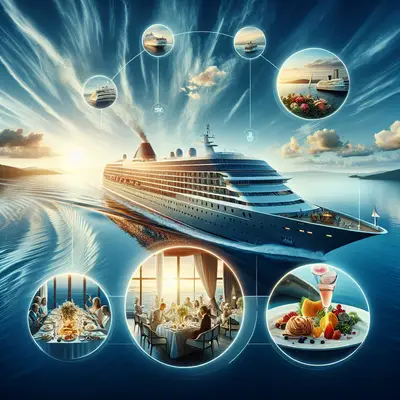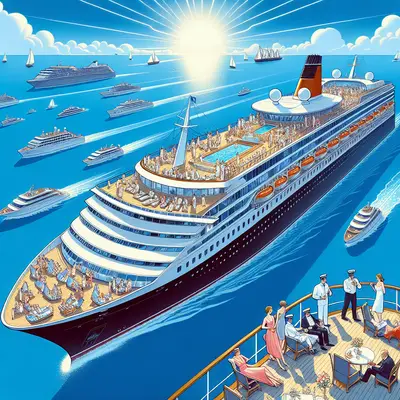
The world’s most compelling cruise lines are no longer merely moving guests from port to port; they are curating floating environments where design, service, and destination planning are orchestrated with almost invisible precision. For the traveler who values nuance over noise, the difference between a pleasant voyage and an unforgettable one often resides in details that rarely make it into brochures. Understanding how cruise lines quietly shape these moments—through ship design, culinary philosophy, staffing strategy, and itinerary engineering—transforms you from passenger to true insider.
The Architecture of Ease: How Ship Design Shapes Your Day
Long before you step on board, naval architects and interior designers have choreographed your movements, moods, and moments of discovery. On the most thoughtfully designed ships, nothing about the flow of the day feels accidental: the way a corridor curves to reveal the ocean, the angle of a lounge chair that avoids direct glare yet captures sunset, the placement of a quiet bar just beyond the evening theater.
Premium lines invest heavily in “behavioral mapping”—anticipating how guests will use spaces from morning to midnight. This is why you may find a coffee bar near a library rather than a pool, or small, semi-enclosed nooks along promenades that feel serendipitously private. Some luxury lines integrate residential-style design—warmer materials, bespoke art, and sculptural lighting—to avoid the “hotel lobby at sea” effect.
For the discerning cruiser, walking the ship on embarkation day reveals an entire layer of intention: traffic is subtly directed to disperse crowds, lounges are staggered to create natural “rhythms” of energy, and certain decks are quietly engineered as sanctuaries. When selecting a line, pay attention not only to cabin size and balcony depth, but to the ship’s public blueprint: where are the transitional spaces, the buffer zones, the vantage points? Those are where the real luxury lives.
The Hidden Logic of Itineraries: Why Some Routes Feel Effortless
An itinerary is never just a list of ports; it is a narrative. The most sophisticated cruise lines treat each voyage as a story arc, with pacing, contrasts, and moments of crescendo. Time at sea is balanced with days ashore not merely by count, but by intensity—pairing an immersive, long-day port call with a quieter, half-day anchorage, or spacing out “marquee” cities with refined, lesser-known harbors.
Lines that court seasoned travelers increasingly favor “port choreography” over pure quantity. That might mean sailing at night into a fjord to catch first light over dramatic cliffs, or timing arrivals to avoid the peak congestion of larger mass-market vessels. In regions like the Mediterranean or Caribbean, an elegant operator might shift calls to smaller, nearby ports, trading brand-name recognition for authenticity and ease—arriving before local markets open, or staying late enough to experience evening culture.
Insiders look for clues: overnights in complex cities (Tokyo, Venice, Istanbul), late departures that enable proper dinners ashore, and sea days positioned as intentional interludes rather than logistical necessities. These often indicate a line that sees the voyage as a curated progression, not a checklist. The result is a journey that feels uncannily “well-timed,” as though the ship and your energy levels were in silent conversation.
Service With Memory: The Quiet Sophistication of Personalized Attention
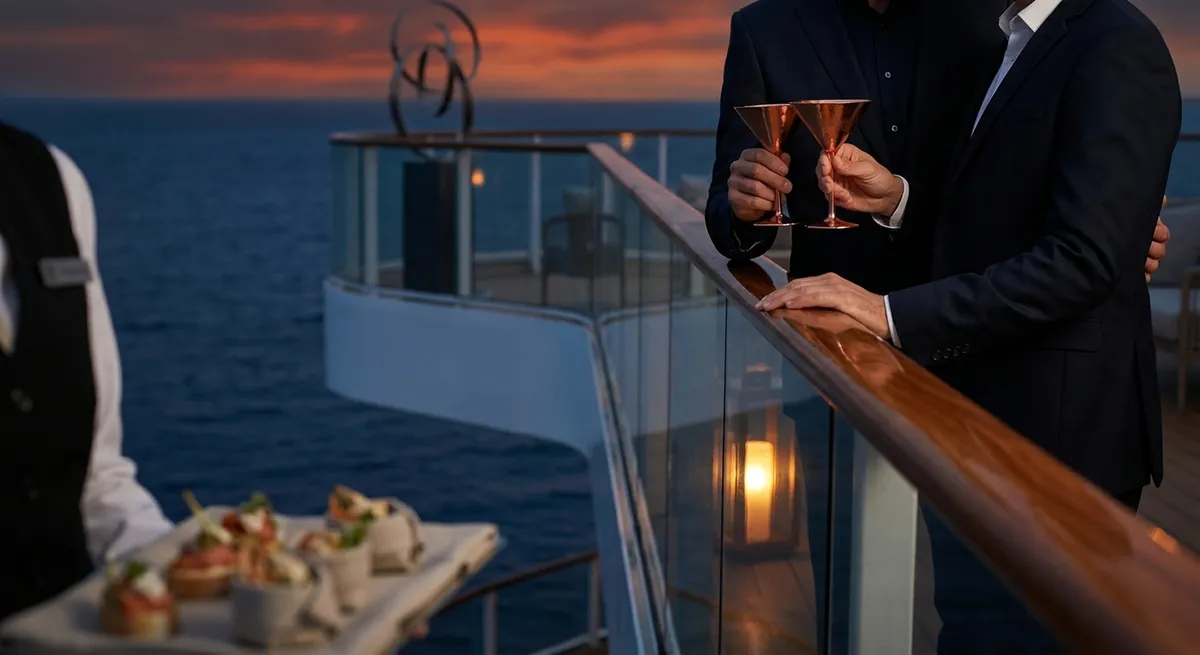
What distinguishes an elevated cruise line is not just friendliness, but memory. On the finest ships, service teams are trained not only in etiquette but in pattern recognition—observing your preferences subtly and then acting on them without ceremony. Your morning choice of tea, your preferred level of cabin privacy, the way you take your martini: these become part of an informal, living dossier shared across departments.
The most refined operators invest in generous staff-to-guest ratios, but numbers alone are incomplete. The sophistication lies in how that staffing is deployed. Butler and suite services are often cross-trained with concierge and dining teams, creating a unified front of knowledge about your needs. Housekeeping and bar staff discreetly communicate—your choice of pillow firmness, for example, may correspond with the evening turn-down ritual and even the type of nightcap suggested.
For the enthusiast, this means two things. First, your subtle signals matter: where you linger, what you ask about, how you respond to recommendations all inform the personalization that follows. Second, choosing lines known for high staff retention increases the likelihood of encountering crews who treat service as a craft, not a transaction. Seasoned teams can read a guest’s desired level of interaction—knowing when to engage in conversation and when to disappear gracefully—creating that rare atmosphere of being both cared for and left in peace.
Culinary Intelligence at Sea: Beyond “Fine Dining” Labels
Onboard dining has entered a new era, but for the discerning palate, it’s less about theatrics and more about coherence. The best cruise line culinary programs display a kind of quiet intelligence: menus that align with the region being sailed, wine lists that reflect genuine curation rather than brand partnerships, and sourcing strategies that privilege freshness and seasonality over spectacle.
Premium lines increasingly use the ship as a laboratory for regional expression. Sailing in the Greek isles, you might notice a breakfast table subtly tilting toward local honeys, yogurts, and cheeses; in Alaska, the arrival of a specific salmon run may shape the evening menu. On some voyages, chefs collaborate with local markets or fishermen, integrating “same-day” ingredients into tasting menus and cooking classes.
Wine and beverage programs, too, are becoming more nuanced. Instead of merely stocking marquee labels, sophisticated operators work with master sommeliers to build collections that mirror the voyage—from coastal whites in the Mediterranean to volcanic island wines in the Canaries. Cocktail menus may evolve during the itinerary, introducing regional spirits and techniques as you move from one culture to another.
Insiders look for menus that change thoughtfully (not chaotically), small-dining venues that feel genuinely chef-driven, and culinary enrichment that goes beyond demonstrations—think intimate wine seminars, terroir-focused tastings, or market-to-table excursions that translate directly to that evening’s menu.
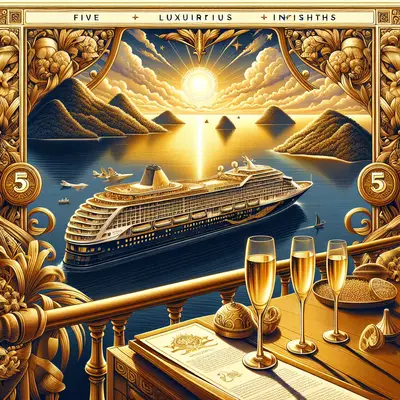
Five Insider Markers of a Truly Elevated Cruise Line
For those who have sailed extensively, certain quiet indicators separate the merely luxurious from the genuinely exceptional. Enthusiasts often look past headline amenities and instead evaluate cruise lines on these nuanced dimensions:
Acoustic Discipline
On the most refined ships, noise is treated as an element of design. Public areas are subtly acoustically zoned: live music is audible but not invasive, announcements are minimal and discreet, and even engine and mechanical sounds are carefully dampened. A ship that feels sonically calm—even when full—signals high-level engineering and thoughtful planning.
Lighting as Atmosphere, Not Afterthought
Lighting on premier lines is layered, adjustable, and highly intentional. Notice the absence of harsh overhead glare in lounges, the warm dimming in corridors at night, and the way exterior deck lighting preserves the drama of the night sky. This careful modulation supports circadian rhythm and invites relaxation in ways guests feel, even if they cannot name.
Art and Libraries That Reflect a Point of View
Beyond decor, some cruise lines assemble true onboard collections—artworks with provenance, curated photography, and libraries that are more than decorative shelves. The presence of regionally relevant titles, serious travel literature, and well-presented exhibitions reveals a line that assumes its guests are intellectually curious and treats the voyage as a cultural experience.
Seamless Shore Experiences That Respect Pace
Elevated operators curate shore excursions with an eye toward depth and comfort rather than volume. Group sizes are kept intentionally small; guides are often scholars, conservationists, or long-time locals rather than generic tour staff. Look for excursions that offer optional “early returns,” private-access hours, or layered choices within the same outing—elements that respect individual stamina and interest.
A Philosophy of Space per Guest, Not Just Ship Size
Tonnage and passenger count matter less than how space is allocated. The connoisseur evaluates “space ratio”—how many square feet of public and private area are effectively available per guest. Ships that feel uncrowded at full capacity, where you can always find a secluded corner or quiet deck chair, embody a kind of spatial luxury that no brochure statistic can fully convey.
Conclusion
As cruise lines compete on features and fanfare, the true markers of excellence are increasingly those that resist easy marketing: the trajectory of a sunrise viewed from a thoughtfully placed deck, the intuitive way a server remembers your unspoken preferences, the gentle pacing of an itinerary that seems to anticipate your energy before you do. For the refined traveler, cultivating an awareness of these subtleties transforms every voyage into a study in craftsmanship.
To sail with discernment is to look beneath the surface—assessing not only where a ship is going, but how it carries you there. In that space between engineering and emotion, logistics and leisure, the finest cruise lines are quietly redefining what it means to travel well at sea.
Sources
- [Cruise Ship Design and Construction – Cruise Lines International Association](https://cruising.org/en-us/news-and-research/research/2021/maritime-innovation-and-technology) - Overview of ship design, innovation, and technology trends in modern cruise vessels
- [CLIA 2024 State of the Cruise Industry Report](https://cruising.org/en/news-and-research/research/2024-state-of-the-cruise-industry) - Industry-wide data on deployment, itineraries, and evolving guest expectations
- [CDC Vessel Sanitation Program](https://www.cdc.gov/nceh/vsp/default.htm) - Official U.S. guidance on health, hygiene, and operational standards on cruise ships
- [Norwegian University of Science and Technology – Acoustic Design in Ships](https://www.ntnu.edu/ima/acoustics) - Research hub covering principles of acoustic engineering relevant to shipboard environments
- [Wine Education by Court of Master Sommeliers, Americas](https://www.mastersommeliers.org/) - Insight into professional wine curation and service standards that influence high-end cruise beverage programs
Key Takeaway
The most important thing to remember from this article is that this information can change how you think about Cruise Lines.