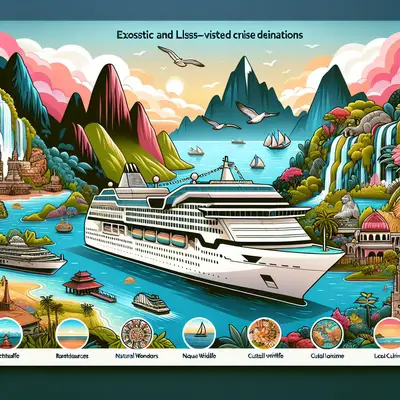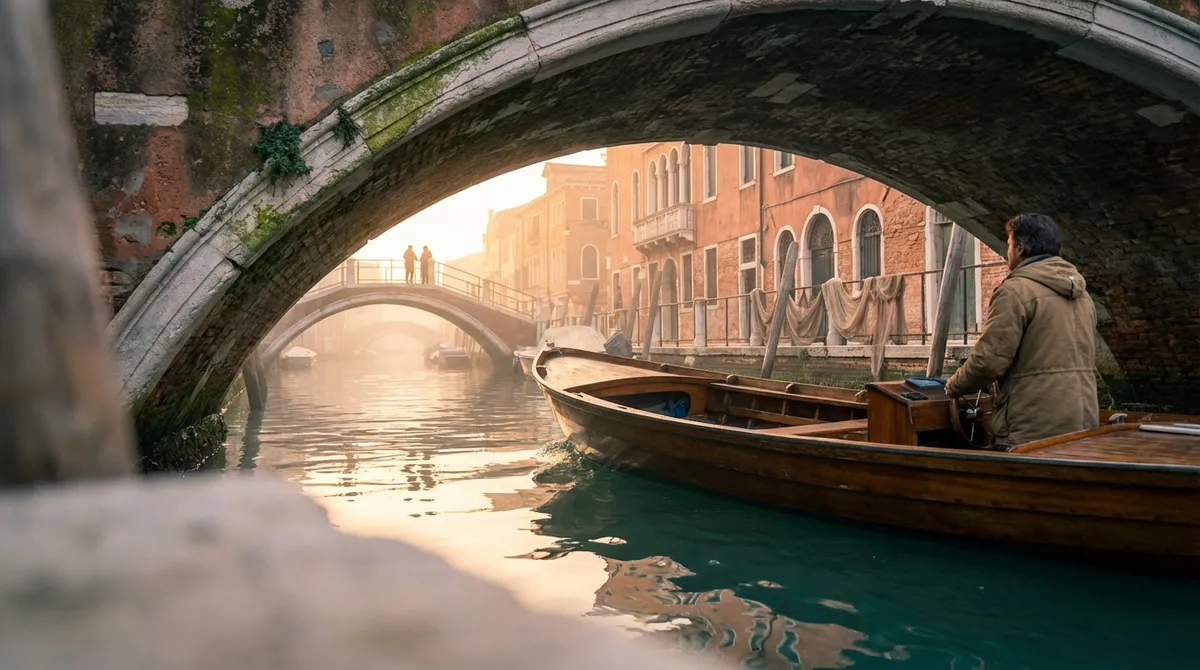
For those who treat the ocean as a preferred address rather than a mere transit route, destinations are less about pin-drops on a map and more about how a place unfolds when approached by water. The most intriguing ports do not simply welcome ships; they choreograph an arrival—light, skyline, tide, and tempo converging into a first impression that cannot be replicated by airport or highway. This is where refined cruising distinguishes itself: in cities and coastlines that only fully disclose their character to guests who arrive with salt on their sleeves.
The Quiet Drama of Arrival: When the City is the Show
Certain destinations have learned that the approach is half the experience. Sail into Stockholm through the skärgård and you pass a slow parade of forested islets and discreet summer houses—an extended overture that resets the senses long before you glimpse the Royal Palace. Glide into Hong Kong at dawn and Victoria Harbour becomes an amphitheater of glass and mountain, the skyline slowly igniting as if on cue.
Arrivals such as Venice (under carefully controlled ship access), Québec City, Sydney, and Lisbon reward those who rise early and claim a discreet vantage point on deck. The premium experience here is not about champagne flutes and staged fanfare, but about having the discipline to be present as the light shifts and the city reveals its contours. In these moments, the vessel becomes a private balcony on a live performance—a perspective that land-based travelers can only approximate from fragmented viewpoints.
For the practiced cruise guest, this is less a photo opportunity and more a ritual: studying the geometry of the harbor, the way working vessels move, the proportion of historic to modern architecture, and the subtle cues that hint at a city’s true pace. The destination begins long before the gangway is lowered.
Micro-Geographies: Reading a Coastline Like a Collector
Experienced cruisers know that not all ports are created equal, and that the most rewarding itineraries read like a curated gallery of “micro-geographies”: narrow channels, river estuaries, volcanic arcs, and island clusters that cannot be fully appreciated from land. Think of Norway’s inner fjord routes, where waterfalls appear and vanish behind granite walls, or the Greek archipelagos where wind, current, and light define a different personality from one neighboring island to the next.
Instead of focusing solely on marquee city names, refined travelers increasingly evaluate itineraries by the complexity of the approaches between them. How many pilots are engaged? Is there a river transit, a fjord, a reef-fringed lagoon? Destinations such as Bordeaux, Seville (via the Guadalquivir River), or Ho Chi Minh City (via the Saigon River) require deep navigational choreography and reward guests with a sense of “earned arrival” that simply does not attach to a quick shuttle from airport to city center.
These micro-geographies also determine the atmospheric quality of the voyage: the color of the water, the texture of coastal vegetation, even the way sound carries at anchor. To the connoisseur, a sailing through the Chilean fjords or the outer islands of Japan is less about ticking ports and more about inhabiting these subtle transitions in the landscape.
Time as a Luxury: Late Departures, Overnights, and the Art of Lingering
For many, the true hallmark of a premium cruise destination is not the port itself, but how long you are allowed to linger within it. Dusk and after-dark hours are when a city’s most authentic character asserts itself: when business districts empty, residential neighborhoods glow, and harbors shift from commerce to contemplation.
Late departures in ports such as Dubrovnik, Valletta, and Montevideo allow guests to experience the city’s evening ritual—local families strolling the waterfront, café terraces filling, church bells marking the hour. Overnight calls in places like Istanbul, Cape Town, or Singapore recalibrate the relationship between ship and shore: the vessel becomes a floating boutique hotel, a serene base from which to explore by night without the logistical frictions of traditional inland travel.
Discerning cruisers now read itineraries like horologists read movements, looking for the “fine complications” of time: Are there overnights in ports where the nightscape is distinctive? Are key cultural cities given a full day plus an evening? Does the line schedule departures to coincide with golden hour transits out of natural harbors such as Rio de Janeiro or Auckland? In this calculus, an itinerary with fewer ports but more generous stays often proves the more luxurious choice.
Five Discreet Insights for the Devoted Cruise Enthusiast
Experienced guests rarely speak about these practices in brochures or lounge small talk, yet they quietly transform how destinations are experienced from the sea.
Harbor Orientation Is a Hidden Luxury Metric
Before booking, study satellite imagery and nautical charts of each port. Ports like Kotor, San Juan, or Cartagena reveal their history and topography from the water in a way that inland cities cannot. A harbor framed by fortifications, cliffs, or a true amphitheater of hills will usually offer far richer on-deck viewing than a purely industrial container port on the city’s edge.
Tenders as Privileged Access, Not an Inconvenience
Many guests avoid tender ports; connoisseurs often prefer them. In destinations like Santorini, Portofino, or the smaller isles of French Polynesia, arriving by tender means cutting directly into the most scenic arcs of the bay, often with uninterrupted views back toward the ship. The tender ride itself becomes a low-key coastal cruise, and savvy guests time their return to coincide with sunset for cinematic silhouettes of both town and vessel.
Pilotage Windows Offer the Purest Sense of Place
The quiet drama when a local pilot climbs aboard—often in the blue-grey pre-dawn hours—is an underappreciated moment. This is when the ship begins to speak the language of the destination: local traffic patterns, currents, and unmarked subtleties of the seabed. Guests who step outside or to forward observation lounges at this hour experience a coastal world that is still largely in “working mode”—fishermen, tugs, ferries—free from the tourist gloss that arrives later in the morning.
Land Excursions Are Stronger When Water Stays in View
It is tempting to chase distant attractions; the more practiced approach is to privilege experiences that maintain a visual or historical relationship with the sea. In places like Amalfi, Marseille, or Madeira, terrace walks, cliffside monasteries, and harbor-facing museums feel more coherent when the ship remains in sight or at least conceptually present. It sustains the sense of being a maritime guest, not a temporarily relocated land tourist.
Seasonal Edges Reveal the Authentic Rhythm of a Port
Shoulder seasons and “edge months” often show ports at their most interesting. In early spring or late autumn in the Mediterranean, the elemental presence of the sea returns: locals reclaim promenades, colors shift, and the light takes on a softer, more oblique quality that flatters both stone and water. Destinations such as Bergen, Tallinn, or Boston reveal far more of their civic personality when the cruise crowds thin and the relationship between citizens and their waterfront resumes its natural equilibrium.
Destinations That Live Best from the Water
Not every celebrated city rewards a sea approach, and not every modest harbor reads as modest when seen from a ship. Some destinations achieve a rare synthesis: the historical depth of a great city, the visual power of a natural amphitheater, and the daily theatrics of a working port. These are the places that quietly become “anchor cities” in a seasoned cruiser’s mental atlas.
Consider Valletta, whose bastioned limestone walls and baroque skyline seem architected for maritime theater; Quebec City, perched above the St. Lawrence with its layered history visible from river level; or Cape Town, where Table Mountain forms an almost operatic backdrop to the V&A Waterfront. In these ports, simply remaining aboard for an hour post-landing can be the most contemplative part of the day—watching ferries cross, tugs pivot, and the slow choreography of a harbor at work.
Equally compelling are smaller capitals of seafaring culture—Reykjavík, Auckland, Trieste, or Hvar—where the scale is human and the line between local and visitor blurs along the quay. Here, the luxury lies not in opulent infrastructure but in a kind of maritime intimacy: you are close enough to read the names on fishing boats, to see schoolchildren cutting across the harborfront, to sense how the sea still orders daily life.
Conclusion
The most memorable cruise destinations are rarely defined only by the postcard view or the checklist of museums ashore. They are destinations in which the approach by sea, the duration of the stay, and the quiet intervals of observation from deck combine to create a layered understanding of place. For those who prize refinement over spectacle, the true luxury is perspective: the ability to watch cities and coastlines reveal their subtler selves from the dignified distance of the outer deck rail.
In an era of rushed itineraries and crowded ports, it is the traveler who slows down, studies the harbor, and chooses voyages for their coastal narrative rather than their port count who discovers the deeper privilege of traveling by ship: not just seeing the world, but understanding how it meets the sea.
Sources
- UN World Tourism Organization – Cruise Tourism Report – Overview of global cruise tourism trends and destination dynamics
- CLIA (Cruise Lines International Association) – 2023 State of the Cruise Industry – Industry insight into deployment patterns, seasonality, and popular regions
- Port of Stockholm – Cruise Traffic Information – Details on approaches and berthing that illustrate complex coastal access to a major Baltic capital
- Venice Port Authority – Sustainable Cruise Measures – Official information on how large cruise ships access the Venice area via regulated routes
- Port of Sydney – Cruise Operations – Background on harbor operations and the maritime context of arrivals into Sydney Harbour
Key Takeaway
The most important thing to remember from this article is that this information can change how you think about Destinations.