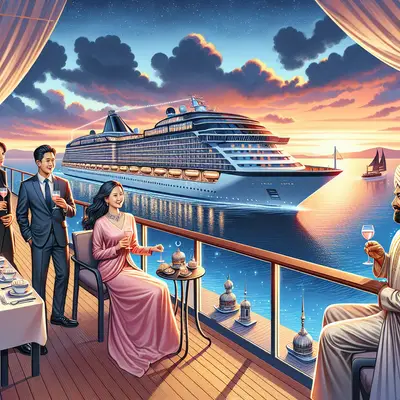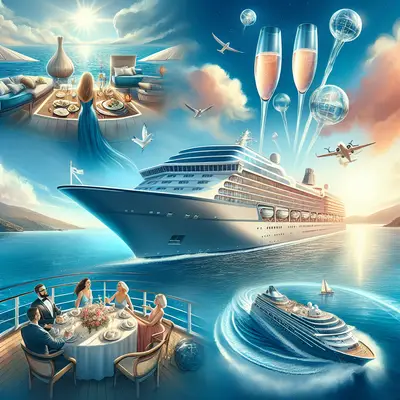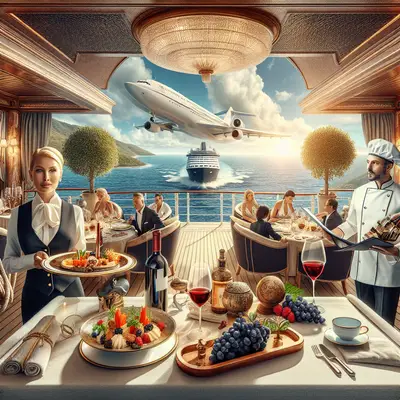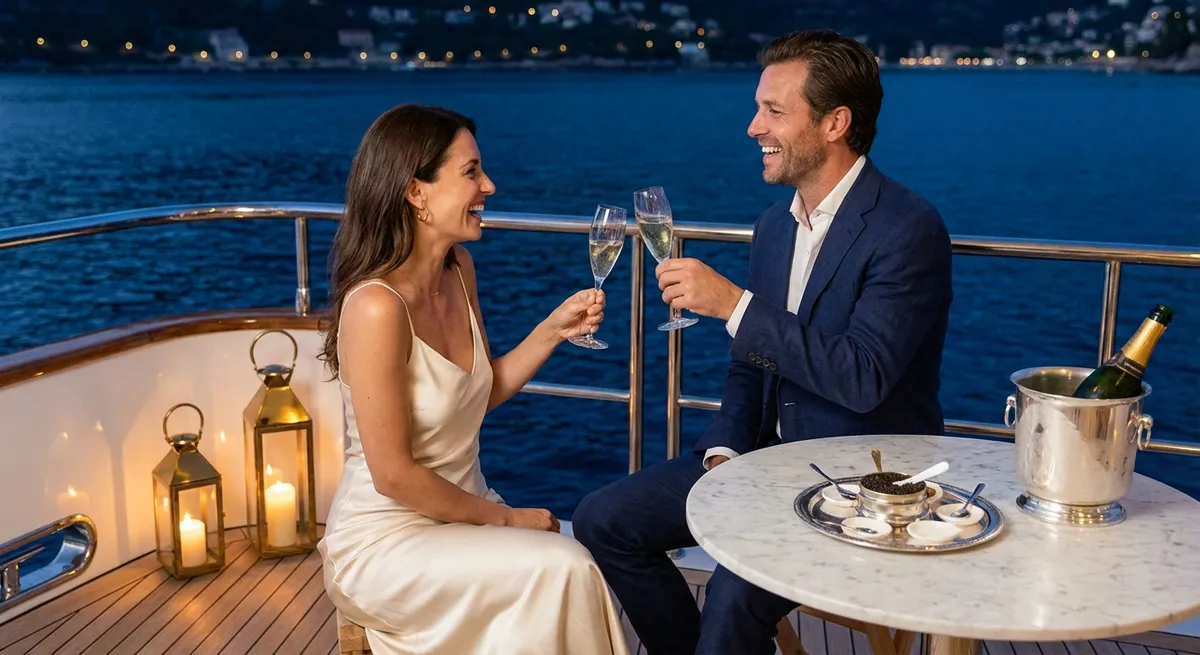
Luxury cruising has moved quietly but decisively beyond obvious opulence. The most coveted experiences at sea are now defined less by spectacle and more by nuance: space that feels thoughtfully edited, service that anticipates rather than interrupts, and itineraries designed with connoisseurs in mind. For travelers who expect their time to be curated as carefully as their surroundings, the new luxury cruise landscape offers a level of refinement once reserved for private yachts and invitation-only retreats.
Below, five exclusive insights reveal how discerning guests are navigating this elevated world—and how to recognize a ship, a suite, and a sailing that are genuinely in a different league.
1. The Real Luxury Metric: Space, Silence, and Seamless Flow
The most telling indicator of true luxury at sea is not marble or chandeliers; it is the ratio of guests to space—and how that space is orchestrated.
On the finest vessels, public areas are sculpted to create “pockets of privacy”: intimate nooks in observation lounges, terraces with just a handful of loungers, and bars where conversation feels low, not loud. Corridors are often slightly wider; ceilings, fractionally higher. These subtle design choices absorb sound and movement, making the ship feel more like a boutique residence than a floating resort.
For the seasoned cruise guest, deck plans become as important as suite categories. Look for ships with a notably low guest-to-crew ratio and generous square footage per passenger—these two numbers, taken together, reveal far more about the onboard experience than any brochure superlatives. On such ships, you are less likely to queue for anything: not for embarkation, not for tenders, not for a cappuccino before a morning excursion. The entire experience becomes an exercise in unhurried ease, where time feels elastic and the day unfolds without friction.
2. Suite Design as a Quiet Art Form
In the luxury segment, the most memorable suites are not those with the most extravagant décor, but those where every detail has been considered with almost residential precision.
Thoughtful suite design feels intuitive. Wardrobes are deep enough to accommodate structured garments and formalwear, with proper hanging height for gowns and tailored jackets. Lighting is layered—ambient, task, and accent—so you can read comfortably at night while your partner sleeps, or dress for dinner in flattering, warm-toned light rather than harsh overhead glare.
Bathrooms on the finest ships now rival those of top urban hotels: double vanities with legitimate counterspace, rainfall showers with consistent water pressure, and, increasingly, windowed bathrooms that borrow natural light from the suite itself or the ocean beyond. Storage is discreet but generous, allowing luggage to vanish completely from view. Amenities, too, are chosen with connoisseurs in mind: full-size, often spa-grade bath products, high-thread-count linens, and customizable pillow menus that reflect a genuine understanding of sleep ergonomics rather than a token luxury gesture.
The most coveted suites are those that feel less like “cabins” and more like seaside apartments: defined living and sleeping zones, proper dining tables for in-suite service, and verandas deep enough that you could comfortably linger with a book and a bottle of wine, not merely stand to admire the view.
3. The Discreet Choreography of Personalized Service
True luxury service at sea is defined by discretion, memory, and restraint. It is not the server who repeats your name at every interaction, but the one who quietly learns your preferences and anticipates them without performative fuss.
On the most refined ships, butlers, stewards, and waitstaff operate almost like a well-rehearsed ensemble. Your suite attendant notices that you prefer sparkling water over still and adjusts your daily setup. The sommelier remembers that you like your white wines with texture and minimal oak, and offers thoughtful alternatives in each port. A shore concierge notes that you tend to avoid large-group excursions and unearths more tailored, small-scale options that align with your interests.
What sets the top tier apart is the consistency of this experience from venue to venue, day to day. Service feels warm but never ingratiating, polished but never stiff. Staff strike that rare balance of familiarity and formality, learning precisely when to engage and when to step back. For many seasoned cruisers, this choreography of human interaction—refined, unhurried, and intuitively attuned—is what keeps them returning to a particular line or ship again and again.
4. Itineraries Curated for Connoisseurs, Not Crowds
While mainstream cruises often prioritize marquee ports and headline attractions, the most compelling luxury itineraries are increasingly defined by access and timing.
Rather than a quick midday call on a major port, premium lines are investing in overnight stays and late departures, allowing guests to experience destinations when the cruise crowds have dissipated. Imagine wandering Dubrovnik’s old town in the soft evening light once day-trippers have gone, or savoring a lingering dinner ashore in Lisbon with the comfort of returning to your ship just a short stroll or drive away.
Smaller, all-suite ships and yachts can also reach ports that are physically out of reach for larger vessels—think tucked-away harbors in the Greek isles, small fjord towns in Norway, or private-island experiences in the Caribbean designed specifically for a single ship’s complement of guests. Increasingly, culinary and cultural depth shape these itineraries: market visits with onboard chefs, private gallery viewings, vineyard dinners limited to a handful of guests, or expert-led expeditions in polar regions where the focus is on education as much as spectacle.
For the well-traveled cruiser, the question has shifted from “Where does the ship go?” to “How does the ship engage with where it goes?” The latter is where true luxury reveals itself.
5. Wellness and Gastronomy as Expressions of Place, Not Afterthoughts
The most sophisticated luxury cruises now treat wellness and gastronomy not as standalone attractions, but as integrated, place-sensitive experiences.
In the spa and fitness realm, programs are increasingly aligned with itinerary and climate. In Northern Europe, you might find Nordic-inspired thermal circuits and saunas with ocean-facing views; in the tropics, open-air yoga at sunrise, or treatments built around indigenous botanicals. Wellness at sea is evolving from generic massages and treadmills to holistic offerings: sleep-focused programs, nutrition consultations, and partnerships with renowned wellness brands that lend real substance to spa menus.
Culinary programs have likewise become more nuanced. Instead of a single “gala night” or a token regional dish, leading luxury lines are reimagining their menus daily to reflect what is fresh and local. Specialty restaurants lean into authenticity over theatrics, with chefs often sourcing ingredients like seafood, produce, and cheeses directly from ports along the route. Wine lists are increasingly curated with small producers and biodynamic labels, often reflecting the regional character of the itinerary—Greek island sailings featuring Santorini Assyrtiko, or Mediterranean voyages spotlighting limited-production Italian and French wines.
Perhaps most tellingly, the best ships understand that luxury is as much about choice as indulgence. Guests can enjoy exquisitely plated multi-course dinners one evening, and a perfectly executed, unpretentious room-service meal on the balcony the next—both experiences executed with the same level of culinary rigor.
Conclusion
Luxury cruising today is less about ostentatious statements and more about cultivated subtlety: space that breathes, service that listens, itineraries that resonate, and experiences that feel precisely attuned to the individual traveler. For those who value craftsmanship over spectacle and depth over distraction, the finest ships offer something rare—a moving sanctuary, where every day feels both meticulously arranged and effortlessly relaxed.
For cruise enthusiasts, understanding the quiet signals of true luxury—guest-to-space ratios, suite ergonomics, service culture, and the caliber of engagement with each destination—transforms the act of choosing a voyage into an art form in its own right.
Sources
- Cruise Lines International Association (CLIA) – 2024 State of the Cruise Industry - Industry data and trends on cruise capacity, guest profiles, and evolving preferences
- Condé Nast Traveler – “What It’s Really Like on a Luxury Cruise” - First-hand perspective on service, space, and amenities aboard luxury ships
- Forbes – “The Best Luxury Cruise Lines For 2024” - Overview of leading luxury lines and what distinguishes their onboard experience
- The New York Times – “Luxury Cruises, Redefined” - Discussion of small-ship, high-end cruising and the shift toward intimate, experience-driven sailings
- Harvard T.H. Chan School of Public Health – Sleep and Health - Background on the importance of sleep quality, relevant to evaluating wellness and suite design on luxury cruises
Key Takeaway
The most important thing to remember from this article is that this information can change how you think about Luxury Cruises.