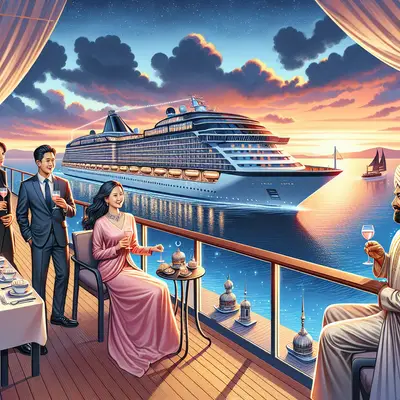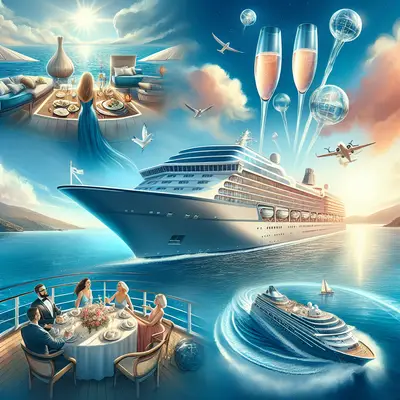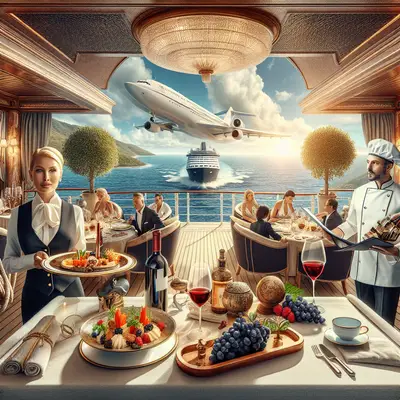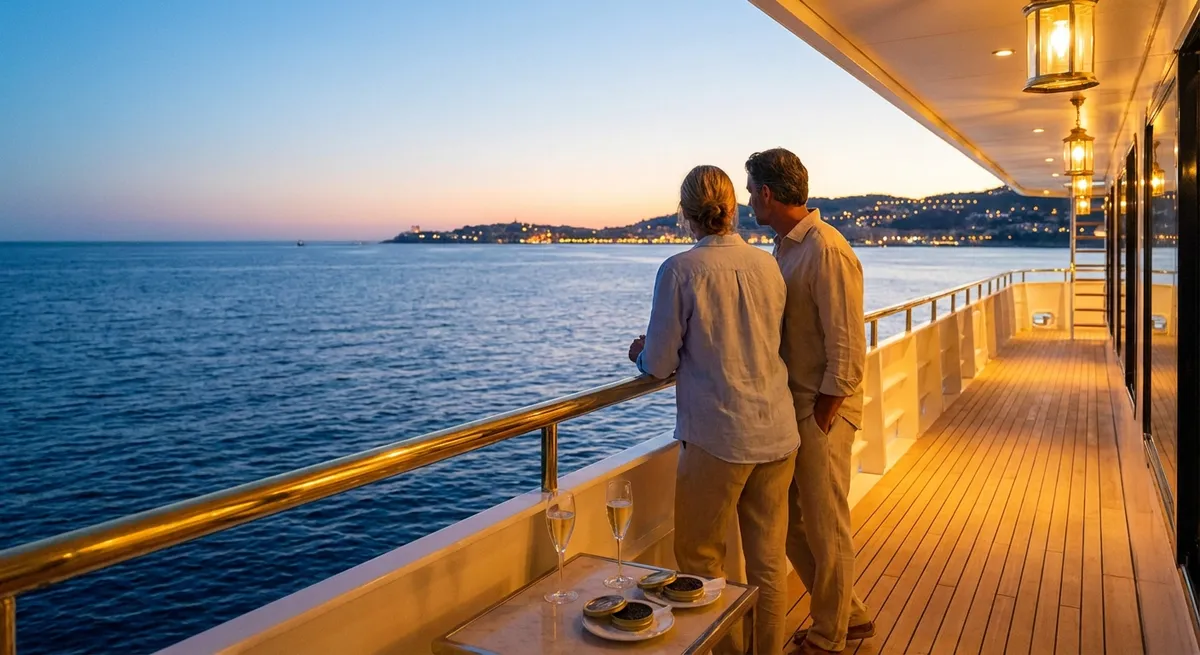
For the traveler who views the ocean as a private salon rather than a backdrop, luxury cruising is no longer about size, spectacle, or excess. It is about calibration—of space, of service, of silence. The most refined voyages feel less like a holiday and more like a perfectly choreographed interval between chapters of your life. What unfolds on board is not simply a journey from port to port, but a sequence of details that whisper rather than shout: a wine quietly opened at the right moment, a crew member who anticipates your stride across a gently rolling deck, a private balcony that feels like a front-row seat to the horizon.
Below, we explore five exclusive insights that seasoned cruise enthusiasts quietly look for—signals that a ship is not just “luxury,” but truly elevated.
The New Benchmark: Space, Silence, and Intelligent Design
In the upper tiers of cruising, square footage is no longer a vanity metric; it is an instrument of ease. The most accomplished luxury vessels use space as a design language, creating a rhythm of intimacy and openness that you feel before you consciously register it.
Public rooms are proportioned to conversation, not crowds. Lounges feature tiered seating that allows for privacy without isolation; you can observe the room without being observed. Hallways are subtly widened and gently lit to encourage an unhurried pace, and cabin soundproofing—often overlooked—becomes a decisive hallmark of quality. On premium ships, you’ll notice that doors close with a hushed click, not a hotel-style slam; that you rarely hear your neighbors; that mechanical vibration is managed so effectively that the ship feels more like a waterfront residence than a moving vessel.
True connoisseurs study deck plans before booking, noting the ratio of suites to overall tonnage, the distribution of guest spaces (are quiet nooks built into each deck?), and the separation of high-traffic hubs from stateroom corridors. When space is thoughtfully choreographed, you experience something rare at sea: the sense that the ship is full of life, yet your own journey remains supremely unhurried and discreet.
Exclusive Insight #1: Seek ships where space feels curated, not simply generous—particularly those with low guest density and clearly defined quiet zones.
Service as Silent Choreography, Not Performance
On a truly elevated cruise, service does not exist to congratulate itself. It exists to protect your attention: to ensure that your focus remains on the sea, your companions, and your own thoughts, rather than the logistics of daily life.
The distinction lies in anticipation. Staff remember the rhythm of your day without needing to ask repeatedly: when you prefer your suite made up, which table offers your favorite view, whether you prefer still or sparkling without being prompted. On some of the most refined lines, staff training emphasizes micro-observation—how you hold a menu, which wines you linger over, whether you return from shore appearing energized or tired. The response is equally subtle: a slower dinner pace when you come back sun-drenched from a long excursion, a lighter pillow menu suggestion after a late-night jazz set.
Seasoned cruisers often gauge service quality in unscripted moments: a misdirected room-service tray that is corrected with composure and speed; a last-minute tender change handled so seamlessly it feels planned; a dietary nuance remembered several days later without repetition. The most impressive service never centers on the staff; it centers on the guest’s feeling that everything is quietly, effortlessly handled.
Exclusive Insight #2: Watch for service that disappears as soon as it has fulfilled its purpose—staff who are present yet never intrusive, and who adapt to your pace rather than dictating it.
Culinary Depth: Beyond “Fine Dining” to Intelligent Gastronomy
Luxury at sea once meant linen-draped dining rooms and multi-course menus; now, the standard has evolved toward something more nuanced: culinary programs that demonstrate intellectual curiosity in addition to technical excellence.
The standout ships treat their kitchens as laboratories of place. Menus shift subtly as the itinerary progresses, integrating regional ingredients and local producers discovered that very week. A Mediterranean sailing may feature olive oils from ports you’ve just visited, tomatoes sourced from a family farm in the previous stop, or seafood purchased that morning and presented with confident restraint. The measure is not how rich or elaborate the cuisine is, but how precisely it reflects where you are—and who you are as a guest.
Wine programs are another quiet differentiator. Look for thoughtfully constructed cellars that balance marquee labels with smaller, characterful producers, often paired with sommelier-led tastings that are conversational rather than didactic. Increasingly, luxury lines are weaving wellness into gastronomy—offering refined, plant-forward, or low-intervention options that feel indulgent, never punitive.
Discerning guests often dine in the same venue multiple times to test consistency and creativity. Does the chef remember preferences and allergies without prompting? Are “off-menu” requests handled with ease rather than tension? The best culinary teams treat your palate as an evolving dialogue, not a one-night performance.
Exclusive Insight #3: Elevation reveals itself in how the ship’s cuisine responds to the journey: menus that shift with geography, wine lists with a point of view, and a kitchen that remembers you as more than a table number.
Suites as Private Galleries of Comfort
A suite on a luxury vessel should function as both a retreat and a frame for the ocean. Beyond size and the obligatory marble bathroom, the true signal of refinement lies in how the space behaves around your habits.
On thoughtfully designed ships, suites are quietly zoned for distinct rituals: a corner that naturally becomes your reading salon, a vanity with excellent lighting and storage, a desk with convenient charging and nothing superfluous, and a balcony large enough to dine on without feeling cramped. Fabrics are chosen not only for appearance but for tactility: the hand of the linen, the pile of the carpet, the weight of the throw blanket on a cool evening at sea.
Lighting—still one of the most underappreciated luxuries—is layered and adjustable: reading lamps with proper focus, dimmable ambient lights that respect both jet lag and dawn, and blackout capabilities that allow the sea to dictate your schedule rather than stray harbor lights. In the most elevated suites, technology is integrated but discreet—controls that are intuitive in a single glance, entertainment systems that vanish when not in use, and connectivity robust enough for work if you choose, but never imposed upon you.
Repeat cruisers often favor ships where suites feel like private galleries, with curated art and objects that reflect the line’s aesthetic viewpoint rather than generic hotel décor. The result is a living space that invites you to linger as willingly as you explore.
Exclusive Insight #4: Judge a suite by its behavior, not its brochure: how it supports your rituals, frames the view, and withdraws from attention when you wish to focus on the sea.
Time as the Ultimate Luxury: Itinerary, Pace, and Rhythm
Among experienced luxury cruisers, the most coveted itineraries are not necessarily the longest or most exotic; they are the best paced. True indulgence lies in voyages that respect your internal tempo as much as your curiosity.
Look for routes with generous time in port—overnights in cities where evenings are essential to understanding the place, or late departures that allow you to dine ashore without racing back to the ship. Niche itineraries may include lesser-known harbors that larger ships cannot access, resulting in shorter tender rides and longer, quieter days on land. Sea days, when thoughtfully distributed, become restorative interludes rather than filler: opportunities for spa rituals, unhurried reading, and long, uninterrupted meals.
Luxury lines often curate experiences that feel more like private appointments than group tours: access to galleries before public hours, vineyard visits hosted by winemakers rather than guides, cooking classes with chefs who then cook for you onboard. The key is intentional curation rather than volume; fewer, more meaningful experiences that integrate seamlessly into the flow of your day.
Frequent cruisers learn to read itineraries like symphonies: where the crescendos of marquee ports will occur, how many quieter movements (sea days) are interwoven, and whether the overarching rhythm feels expansive rather than rushed.
Exclusive Insight #5: When choosing a cruise, treat the itinerary as a score—assess not just where you go, but the tempo of each day and the balance between discovery and repose.
Conclusion
The highest expression of luxury at sea is not found in a single feature, but in the sum of many decisions made with unusual care. It is in the way a corridor softens sound, how a sommelier remembers your curiosity rather than just your preferences, how a suite feels instinctively “right” the moment you arrive, and how an itinerary leaves you more restored than when you embarked.
For those who cherish travel as a refined art form, the modern luxury cruise offers something singular: a moving sanctuary where every horizon is new, yet every detail feels thoughtfully, almost personally, considered. Choose carefully, observe quietly, and you’ll find that the most rewarding ships are the ones that speak in the softest, most eloquent tones.
Sources
- U.S. Federal Maritime Commission – Cruise Passenger Resources - Provides official guidance on passenger rights and considerations when booking cruises
- CLIA (Cruise Lines International Association) – 2023 State of the Cruise Industry Report - Industry overview with data on luxury trends, deployment, and guest preferences
- Seabourn – Official Website - Example of an ultra-luxury cruise line showcasing suite design, itineraries, and service philosophy
- Regent Seven Seas Cruises – The Luxury Experience - Illustrates how high-end lines position space, service, and inclusions as core elements of luxury
- Harvard Business Review – “The Elements of Value” - Explores how sophisticated consumers evaluate value beyond price and features, relevant to understanding luxury travel expectations
Key Takeaway
The most important thing to remember from this article is that this information can change how you think about Luxury Cruises.