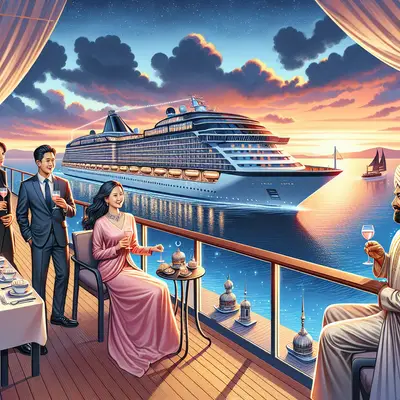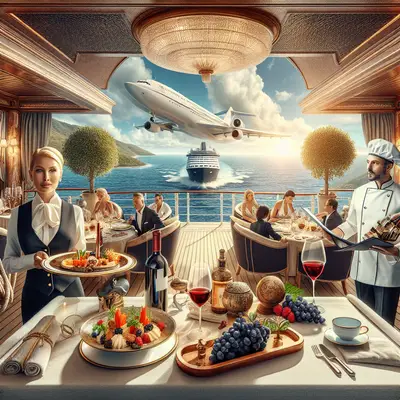
Luxury cruising has moved far beyond chandeliers and caviar. Today’s most desirable voyages are defined not by how loudly they announce their opulence, but by how precisely they anticipate a guest’s inner expectations: privacy, personalization, and a level of calm that feels almost curated. For the sophisticated traveler, understanding these subtleties is the key to choosing sailings that feel less like a holiday and more like a finely composed experience.
Below, we explore how contemporary luxury at sea is being quietly redefined—and share five exclusive, insider-level insights that seasoned cruise enthusiasts increasingly refuse to sail without.
The Quiet Revolution: How True Luxury Has Shifted at Sea
Over the past decade, luxury cruise lines have undergone a deliberate transformation. Where once grandeur was measured in chandeliers and marble, the new benchmark is discretion: silent service, frictionless logistics, and spaces that feel more like private members’ clubs than floating hotels.
The most coveted ships now offer lower guest-to-space ratios, more crew per passenger, and design that emphasizes intimacy rather than spectacle—think small-capacity lounges, tucked-away terraces, residential-style suites, and private concierge desks hidden from the main flow of the ship. Culinary programs focus on provenance and restraint rather than excess: sustainably sourced seafood, regional wine lists curated by onboard sommeliers, and menus that change with the ship’s geography.
Technology supports this quiet luxury rather than overshadowing it. Think unobtrusive digital butler services, pre-arranged in-suite check-in, and ship-wide systems that learn your dining preferences, spa habits, and even which vintage you order by the glass. The effect is not of being impressed upon, but of being subtly understood—an experience that appeals deeply to returning guests who value consistency, nuance, and privacy.
The Architecture of Privacy: Inside the Most Desired Spaces Onboard
One of the clearest markers of high-end cruise design today is how intelligently a ship handles privacy. It’s no longer enough to offer large suites; what matters is how those suites are positioned, shielded, and serviced.
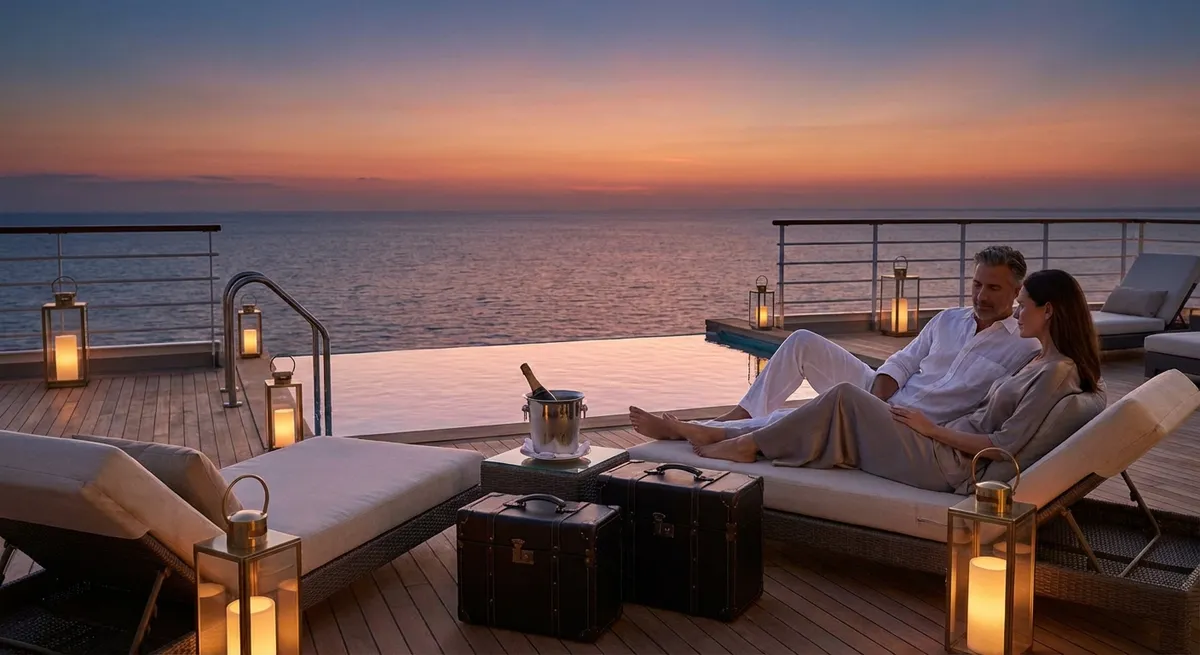
On the most refined vessels, top-tier accommodations are strategically located to avoid through-traffic and mechanical noise, with direct or near-direct access to private lounges, concierge areas, and reserved dining venues. Forward- or aft-facing suites with expansive wraparound balconies create a sense of seclusion that feels almost residential, especially when paired with elements like outdoor daybeds, private whirlpools, or full dining tables for in-suite hosted dinners.
Insulated corridor design, soft-close balcony doors, and thoughtfully angled partitions all contribute to acoustic privacy—an under-discussed but essential component of onboard comfort. High-end lines are also experimenting with what might be called “zoned luxury”: dedicated decks or enclaves with restricted access, private pools and sun decks, and lounge spaces that serve as a kind of living room at sea for suite guests. For travelers who value tranquility over theatre, these quiet pockets often matter more than any headline amenity.
Five Understated Luxuries Experienced Cruisers Quietly Seek
Beyond the obvious hallmarks of high-end cruising, there are a handful of subtle privileges that seasoned guests consistently look for—features that rarely make the brochure cover, yet meaningfully elevate the voyage.
1. Predictive, Not Reactive, Service
The most sophisticated travelers now expect service that operates one step ahead of them. On certain luxury lines, butlers and concierges maintain discreet preference profiles—favorite table numbers, coffee orders, pillow types, even balcony dining habits—and share them shipwide so that every venue feels uncannily in tune with the guest.
For returning cruisers, this can mean your preferred Champagne chilled in your suite on embarkation without being requested, preferred spa therapists proactively offered at optimal times, and your favored wine quietly reappearing in a different restaurant on another evening. This predictive service transforms a cruise from a series of transactions into an ongoing conversation that resumes seamlessly voyage after voyage.
2. Curated Micro-Access in Port
Rather than broad “exclusive” excursions, experienced luxury travelers increasingly seek micro-access: small, precisely curated encounters with a destination that are nearly impossible to replicate independently.
Examples include early-access museum visits before public opening, private use of a historic garden or palazzo for a ship-arranged dinner, vineyard tastings guided personally by the winemaker, or a late-evening gallery opening arranged exclusively for a handful of guests. In emerging destinations, this might take the form of private conservation briefings with local researchers or behind-the-scenes tours of UNESCO sites.
This kind of access turns a port call into something closer to a cultural appointment. On the top-end lines, specialist destination concierges can help design fully bespoke experiences—chartered tenders, local experts, and flexible itineraries that acknowledge the guest’s prior familiarity with the destination rather than assuming first-time visitors.
3. Elegant Control Over Atmosphere and Pace
One of the most undervalued luxuries on a ship is the ability to control the tempo and sensory environment of one’s experience. Discerning cruisers increasingly prioritize vessels that allow them to modulate pace: to step into energy when desired, but retreat into hush when preferred.
This translates into ships with diversified venues: quiet, library-like lounges with full bar service; music-forward spaces where live jazz or classical trios replace canned background audio; and deck plans that keep major entertainment hubs subtly isolated from stateroom corridors. Within suites, this control might manifest as advanced lighting scenes, excellent sound insulation, and robust in-suite dining menus that make a night “in” feel as considered as any evening “out.”
Lines at the higher end of the market also understand that some guests prefer a more subdued social calendar. For them, curated lecture series, intimate wine tastings, and small-format recitals replace frenetic game shows or large-scale productions, allowing guests to choose an atmosphere that aligns with how they wish to feel that day.
4. Authentic, Unhurried Culinary Journeys
For luxury cruisers, dining is less about volume and more about narrative. The most coveted on-board culinary experiences now tend to be slow, layered, and intimately scaled.
Think chef’s table dinners where menus are structured as regional journeys, each course introduced with context about producers, techniques, and the ship’s current latitude. Wine pairings move beyond generic “red or white” to include small producers, unusual varietals, and vertical tastings curated by an onboard sommelier who remembers your preferences from previous nights.
Increasingly, high-end ships are incorporating ingredients sourced locally along the itinerary—fish purchased that morning from a coastal market, olive oils from a grove visited earlier that day, or cheeses and charcuterie curated by artisans guests may have met ashore. The result is a dining program that is not just luxurious, but deeply connected to place and season—a resonant detail for travelers who value context as much as comfort.
5. Thoughtful Wellness That Extends Beyond the Spa
In the premium segment, wellness has expanded from the spa menu into a ship-wide philosophy. Experienced cruisers now look beyond massage lists and thermal suites to gauge how thoroughly a vessel has integrated true well-being into its design and itinerary.
This includes low-occupancy fitness spaces with expert-led small group classes, early-morning deck activities timed to sunrise, and wellness-focused shore experiences such as guided coastal hikes, thermal-bath visits, or yoga on secluded beaches. Nutritional sophistication is another key indicator: genuinely plant-forward menus, cold-pressed juices, sustainably sourced proteins, and staff trained to handle complex dietary needs gracefully rather than treating them as exceptions.
On certain luxury lines, wellness even extends into sleep architecture—high-end bedding, blackout curtains, circadian-friendly lighting, and carefully calibrated climate control—so that the restorative aspect of the voyage begins not in the spa, but in the quiet of the stateroom itself.
Choosing the Right Ship: Reading Between the Brochure Lines
For travelers attuned to these subtleties, selecting the right luxury cruise involves looking past headline amenities and instead examining how a line expresses its values in the margins.
Key indicators include passenger-to-crew ratios, average suite size, and how much of the ship’s real estate is given over to public spaces versus cabins. The presence of a dedicated concierge lounge, robust enrichment programming led by credible experts, and small-group shore experiences are all signals of a line that understands its guests value depth over spectacle.
Equally revealing are the brand’s sustainability commitments and how transparently they’re reported. High-end cruisers increasingly weigh environmental responsibility against indulgence, favoring lines that invest in cleaner propulsion technologies, meticulous waste management, and partnerships with conservation organizations in the regions they visit.
Finally, don’t underestimate the value of a line’s “personality.” Some luxury fleets lean toward a club-like sociability; others cultivate a quieter, almost residential ambiance. Speaking with a specialized cruise advisor who regularly sails in the luxury segment can help decode these nuances, ensuring that the onboard culture aligns with your personal definition of refinement.
Conclusion
The most meaningful luxuries at sea are increasingly the ones that leave the lightest footprint: orchestrated privacy, anticipatory service, culinary integrity, unhurried wellness, and a subtle but sincere respect for the destinations visited. For discerning cruisers, these elements matter more than ever—not as conspicuous statements of status, but as the quiet architecture of a journey that feels precisely one’s own.
Understanding these under-the-radar refinements allows you to navigate beyond conventional notions of “upscale” and into a realm where every detail, from the curvature of a balcony railing to the timing of a port arrival, has been considered with care. In that thoughtful space, luxury is no longer something you are shown; it is something you simply inhabit.
Sources
- [Cruise Lines International Association (CLIA): 2023 State of the Cruise Industry Report](https://cruising.org/en/news-and-research/research/2023/june/state-of-the-cruise-industry-report-2023) - Industry-wide data and trends on capacity, guest demographics, and evolving preferences in cruise travel
- [U.S. Federal Maritime Commission – Passenger Vessel Information](https://www.fmc.gov/resources-services/passenger-vessel-operator-updates/) - Regulatory and operational information on passenger vessel operators serving U.S. guests
- [Harvard T.H. Chan School of Public Health – Healthy Eating Plate](https://www.hsph.harvard.edu/nutritionsource/healthy-eating-plate/) - Evidence-based guidance on nutrition that informs wellness-focused dining programs at sea
- [Seabourn – Official Website: The Seabourn Experience](https://www.seabourn.com/en/us/why-seabourn/the-seabourn-experience) - Example of how an ultra-luxury line articulates its approach to space, service, and enrichment
- [Regent Seven Seas Cruises – Sustainability and Environmental Stewardship](https://www.rssc.com/sustainability) - Insight into the sustainability commitments increasingly prioritized by luxury cruise travelers
Key Takeaway
The most important thing to remember from this article is that this information can change how you think about Luxury Cruises.