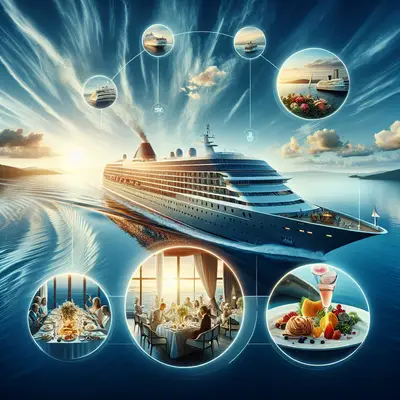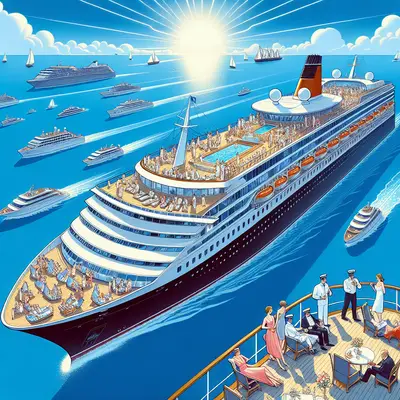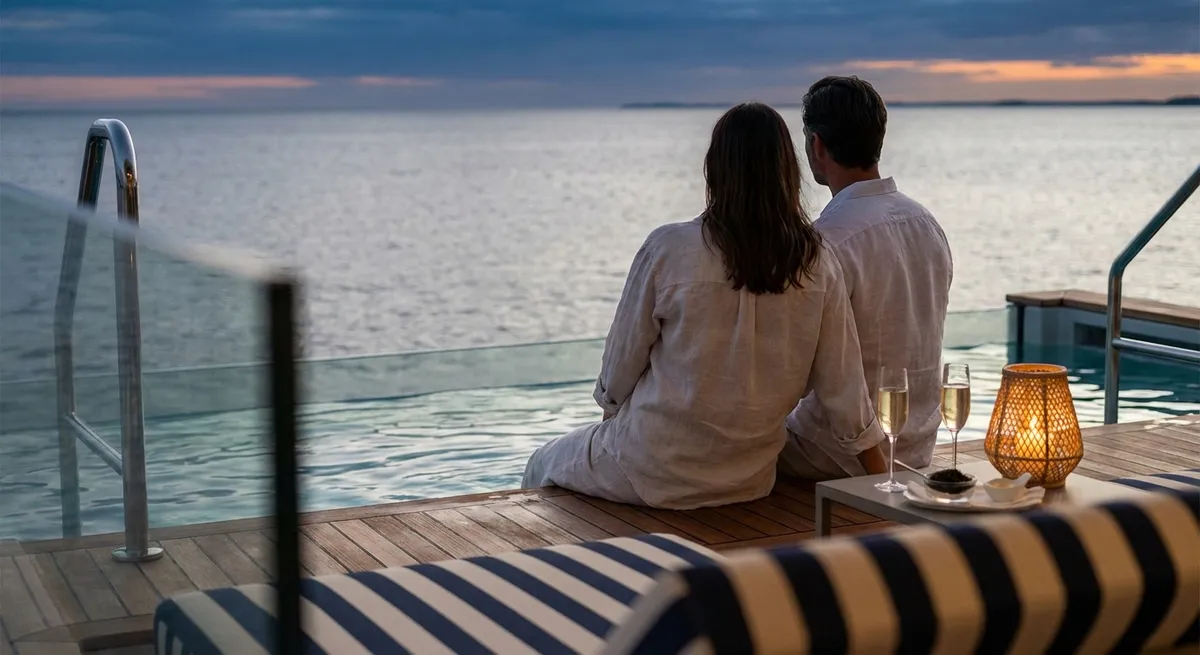
The most rewarding cruise experiences are rarely the loudest or the most publicized. Among the world’s leading cruise lines, a quieter tier of service has emerged—one built not on spectacle, but on nuance. For travelers who value precision over pageantry, the true measure of a line is found in its unadvertised decisions: how it manages space, time, privacy, and the choreography of an entire ship around a few thousand lives at sea.
This is where discerning cruisers increasingly focus their attention—not on the brochure promises, but on the subtleties that separate a very good voyage from an effortlessly exceptional one.
The Architecture of Space: How Cruise Lines Engineer Breathing Room
Long before a guest steps aboard, the most forward-thinking cruise lines are already shaping their experience through ship design. The most luxurious feeling isn’t always a crystal chandelier; it is often the quiet certainty that the ship never feels full.
Premium and luxury lines now devote more square footage per passenger than ever before, especially in public areas that are naturally prone to crowding: atriums, pool decks, and promenades. The top-tier players make conscious trade-offs—fewer cabins, more lounges, multi-deck atriums, and shaded terraces where guests can disappear into the horizon rather than into a crowd.
Subtle design choices define the daily rhythm on board. A narrower corridor leading to a tucked-away bar keeps it feeling like a private club, even on a busy sailing. A deliberately underpublicized forward observation lounge becomes a sanctuary for early risers. Pool decks are tiered and compartmentalized, with quiet, adults-only sections set away from activity hubs, ensuring that tranquility is available without request.
Beyond aesthetics, the best lines use spatial planning as hospitality: sightlines that frame the ocean rather than retail, seating arrangements that favor conversational intimacy over turnover, and al fresco spaces where the wind and sea feel curated rather than incidental.
The Invisible Orchestration: Capacity, Flow, and the Luxury of Time
The true luxury on a ship is not found in square meters, but in minutes. Leading cruise lines increasingly treat guest flow as an art form, orchestrating the movement of thousands of people so that each guest experiences the illusion of spaciousness and spontaneity.
Sophisticated lines now leverage data and behavioral insights—quietly. They stagger showtimes to smooth dinner reservations, open select venues earlier or later based on observed patterns, and adjust buffet station layouts mid-cruise to reduce natural congestion points. When executed well, this feels less like crowd control and more like serendipity: the right bar stool is free at the right moment, and the gangway is clear when you decide to go ashore.
Embarkation and disembarkation are the purest tests of this competence. Certain lines now pre-assign arrival windows based on cabin location and status, use facial recognition or streamlined check-in processes, and integrate luggage handling so that the threshold between pier and stateroom feels remarkably short. On disembarkation morning, the best lines maintain full service—proper breakfast, unhurried lounges, attentive crew—instead of letting the atmosphere slip into controlled chaos.
In daily life on board, the most refined lines fiercely protect unscheduled moments. They avoid over-programming, spacing major events to preserve quiet intervals in lounges and on deck. That discipline allows guests to discover their own pace—arguably the highest form of luxury.
Culinary Precision: Beyond Menus and Into Curation
In the premium tier, every line can offer multiple restaurants and an extensive wine list. The ones that stand apart treat food not as content to be consumed, but as a carefully edited narrative of place and season.
Refined cruise lines increasingly pivot away from generic “international” menus toward tightly focused culinary identities—Nordic minimalism, Mediterranean coastal cuisine, or Japanese-leaning seafood concepts. Rather than overwhelming guests with choice, they curate fewer dishes, executed with higher consistency and better sourcing. The quiet sign of a serious culinary program is not the steakhouse; it is the restraint in over-garnishing a simple grilled fish, or the confidence to offer a short, impeccably balanced dessert selection.
Wine programs have become a key differentiator. Advanced lines employ certified sommeliers, design wine lists that travel with the itinerary, and include by-the-glass options that actually reflect the regions being visited. On Mediterranean sailings, you might discover a focused selection of small-production Italian or Greek labels. In northern Europe, German Rieslings, Austrian Grüner Veltliners, and local beers emerge with equal prominence.
What seasoned cruisers notice most is how the culinary team listens. Quiet menu adaptations for returning guests, off-menu dishes that reappear mid-voyage, and chefs visible in the dining room gauging genuine reactions—all signal a line where cuisine is not pre-programmed months in advance but actively tweaked at sea. The result is an experience that feels crafted rather than pre-packaged.
Service Signatures: When a Cruise Line’s Personality Becomes Personal
The most refined cruise lines understand that genuine luxury is less about scripted politeness and more about a recognizable point of view. Service is no longer just efficient; it is interpretive.
Each brand cultivates its own style: some favor the polished discretion of grand European hotels; others lean into a warm, conversational approach that feels almost residential. Enthusiasts learn to read these signatures: the way a maître d’ remembers a preferred table by the window, the bartender who notes your Negroni ratio without comment, the housekeeper who intuits whether you prefer your cabin serviced early or just before dinner.
Crucially, leading lines now use technology as an enhancement, not a substitute. Pre-arrival preference forms, digital butlers, and wearable devices are most successful when they reduce friction—streamlining specialty dining bookings, shore excursion changes, or spa reservations—while keeping the human interaction intact. The goal is for the guest to experience seamlessness without ever feeling managed.
Another quiet shift is the rise of micro-communities at sea. Instead of generic “meet-and-mingle” events, refined cruise lines curate smaller, affinity-based gatherings: serious wine tastings limited to a dozen guests, enrichment talks followed by intimate captain’s receptions, or photography walks led by the onboard creative team. In these spaces, service becomes less transactional and more relational; crew members and guests recognize each other by name and story, not by cabin number.
Itinerary Intelligence: How Leading Lines Curate Days, Not Just Destinations
For experienced cruisers, the ports themselves are only part of the equation. Increasingly, the way a cruise line designs the actual day—arrival times, overnights, tendering, and onshore options—signals its commitment to a deeper, more thoughtful experience.
Discerning lines now stagger arrivals to avoid peak congestion, arriving early in port to capture the quiet of morning markets or staying late so guests can dine ashore and return under the glow of a harbor at night. Overnight stays in cities such as Venice (subject to current regulations), Barcelona, or Stockholm are not just selling points; they are an acknowledgment that certain places cannot be understood in a rushed six-hour call.
Shore excursion design has evolved from checklist sightseeing to layered access. The more refined programs offer three tiers: a classic highlights overview for first-time visitors, a curated “advanced” experience for returning guests, and highly specialized micro-excursions—local workshops, private tastings, architectural walks with historians—for those seeking depth.
Tender ports, often viewed as an inconvenience, have become an unexpected differentiator. Well-managed lines operate frequent tenders, use comfortable, weather-appropriate craft, and maintain precise timing to avoid queues. The best even coordinate tender arrivals with onboard dining and spa schedules, so guests returning from shore are not met with bottlenecks but with a ship that seems to anticipate their rhythm.
Ultimately, itinerary intelligence is about respect: for the destination, for local communities, and for guests who increasingly value authenticity and ease over sheer port count.
Conclusion
In an era where nearly every cruise line can showcase a glossy brochure, it is the unseen choices that truly define the experience. The quiet calibration of space, time, cuisine, service, and itinerary design is where a line reveals its maturity—and its priorities.
For the discerning cruiser, learning to read these subtleties transforms trip planning from brand loyalty to brand literacy. Once you recognize the lines that invest in invisible excellence, you begin to select voyages not just for where they go, but for how they carry you there.
The reward is a voyage that feels less like mass travel and more like a private, continuously unfolding composition—one that stays with you long after you have stepped ashore.
Sources
- Cruise Ship Design: Creating the Vacation Experience – Architectural Digest overview of how ship design shapes guest experience
- CDC Vessel Sanitation Program – U.S. Centers for Disease Control and Prevention information on health and operational standards aboard cruise ships
- CLIA: 2024 State of the Cruise Industry – Cruise Lines International Association research on industry trends, passenger preferences, and capacity
- Harvard Business School: Service Excellence in Hospitality – Insights into how premium hospitality brands design service models and guest experience
- UNWTO: Tourism and Destination Management – United Nations World Tourism Organization resources on responsible tourism, itinerary planning, and destination impact
Key Takeaway
The most important thing to remember from this article is that following these steps can lead to great results.